
Chullin 71a describes a phenomenon in which ritual impurity “breaks through” an enclosed space. What does this mean? It impurity consider a real force in nature, akin to electricity? Or is ritual impurity a legal convention created by our intentions for objects? Or maybe both???
Chullin 71
sources:
- חולין עא.
טומאה רצוצה בוקעת ועולה עד לרקיע
Impurity in a tight space breaks through and ascends up to heaven
- משנה אהלות ג:ז
טפח על טפח על רום טפח מרובע מביא את הטומאה וחוצץ בפני הטומאה. כיצד? ביב שהוא קמור תחת הבית: יש בו פותח טפח, ויש ביציאתו פותח טפח, טומאה בתוכו, הבית טהור. טומאה בבית מה שבתוכו טהור, שדרך הטומאה לצאת ואין דרכה להכנס…
A space of one handbreadth square and one handbreadth high, in the form of a cube, serves both to give passage to impurity and to act as a screen against impurity. How so? If there was an arched gutter beneath the house – if it had a handbreadth opening, and its outlet had a handbreadth opening – if there was impurity within it, the house is pure; if there was impurity within the house, what is in it is pure; because impurity tends to exit, and it does not tend to enter…
- משנה אהלות ז:ג
המת בבית ובו פתחין הרבה כולן טמאין. נפתח אחד מהן – הוא טמא וכולן טהורין. חשב להוציאו באחד מהן או בחלון שהוא ארבעה על ארבעה טפחים הציל על כל הפתחים…
If a corpse lies in a house to which there are many entrances, they are all impure; if one entrance is opened, it alone is impure and all the others are pure. If there was an intention to take out the corpse through a specific one of them, or through a window measuring four handbreadths square, this affords protection to all other entrances…
- משנה אהלות ו:ו
טומאה תחת העמוד, טומאה בוקעת ועולה, בוקעת ויורדת
If there is impurity under a pillar, the impurity breaks forth upwards and downwards.
- משנה טהרות ח:ב
המפקיד כלים אצל עם הארץ…ר’ יוסי אומר אם מסר לו תיבה מלאה בגדים, בזמן שהיא רוצצת טמאין מדרס, אם אינה רוצצת טמאין מדף…
If one deposited vessels with an am ha’aretz…R. Yose says : if it was a chest full of clothes – if it was tightly packed, the clothes become impure with midras impurity; if it was not tightly packed, the clothes become impure with madaf impurity…
- ויקרא יא: לז-לח
וְכִ֤י יִפֹּל֙ מִנִּבְלָתָ֔ם עַל־כׇּל־זֶ֥רַע זֵר֖וּעַ אֲשֶׁ֣ר יִזָּרֵ֑עַ טָה֖וֹר הֽוּא׃
If such a carcass falls upon seed grain that is to be sown, it is pure;
וְכִ֤י יֻתַּן־מַ֙יִם֙ עַל־זֶ֔רַע וְנָפַ֥ל מִנִּבְלָתָ֖ם עָלָ֑יו טָמֵ֥א ה֖וּא לָכֶֽם׃ {ס}
but if water is put on the seed and any part of a carcass falls upon it, it shall be impure for you.
- ויקרא יד:לו
וְצִוָּ֨ה הַכֹּהֵ֜ן וּפִנּ֣וּ אֶת־הַבַּ֗יִת בְּטֶ֨רֶם יָבֹ֤א הַכֹּהֵן֙ לִרְא֣וֹת אֶת־הַנֶּ֔גַע וְלֹ֥א יִטְמָ֖א כׇּל־אֲשֶׁ֣ר בַּבָּ֑יִת וְאַ֥חַר כֵּ֛ן יָבֹ֥א הַכֹּהֵ֖ן לִרְא֥וֹת אֶת־הַבָּֽיִת׃
The priest shall order the house cleared before the priest enters to examine the plague, so that nothing in the house may become impure; after that the priest shall enter to examine the house.
- פסיקתא דרב כהנא ד:ז
גוי אחד שאל את רבן יוחנן בן זכיי א’ ליה, אילין מיליא דאתון עבדין נראין כמן כשפים, מביאין פרה ושוחטין אותה ושורפין אותה וכותשין אותה ונוטלין את אפרה ואחד מכם מטמא למת ומזין עליו שתים שלש טיפים ואומרין לו טהרתה. א’ לו לא נכנסה רוח תזזית באותו האיש מימיו, א’ לו לאו, אמ’ לו ולא ראיתה אחר שנכנסה בו רוח תזוזית, א’ לו הין. א’ לו ומה אתם עושין, א’ לו מביאין עיקרין ומעשנין תחתיו ומרבצים עליה מים והיא בורחת. א’ לו ולא ישמעו אזניך מה שפיך מדבר, כך הרוח הזה רוח טומאה היא, דכת’ וגם את הנביאים ואת רוח הטומאה וג’ (זכריה יג:ב). וכיון שיצא אמרו לו תלמידיו ר’ לזה דחיתה בקנה לנו מה אתה משיב, א’ להם חייכם לא המת מטמא ולא המים מטהרים אלא גזירתו של הקב”ה הוא, א’ הקב”ה חוקה חקקתי גזירה גזרתי ואין אתה רשאי לעבור על גזירתי זאת חוקת התורה (במדבר יט:ב).
And a non-Jew asked R. Yohanan ben Zakkai saying to him: “These things that you do
seem like witchcraft. You bring a cow and you slaughter it and you burn it and you crush it
and you take its ash, and if one of you becomes impure from a corpse, you sprinkle on him
two or three drops [of the ash mixed with water] and say to him: ‘Ah, now you are pure.’”
So R. Yohanan said to him: “Has the spirit of madness never entered you?” and he
answered: “No, never.” “And have you never seen anyone else who has had the spirit
of madness enter into him?” And he said: “Yes.” And he said to him: “And what do
you do?” And he said: “Roots are brought, they are burned to smoke beneath him, and
water is sprinkled on the spirit until it flees.” And he said to him: “Do your ears not
hear what your mouth is saying? This spirit is the spirit of impurity, as it is written, I
will cause [false] prophets and the spirit of impurity to flee from the Land” (Zech 13:2).
Once the person had left, his disciples said to him: “Master, you pushed him off with
a mere reed [a weak answer]. What explanation will you offer us?” R. Yohanan replied:
“By your life! The corpse does not defile nor does the water purify. It is simply a decree
of the Holy One, blessed be He. Said the Holy One, blessed be He: ‘I have ordained a
statute, I have issued a decree, and you may not transgress My decree. This is the statute
of the Torah (Num 19:2).’”
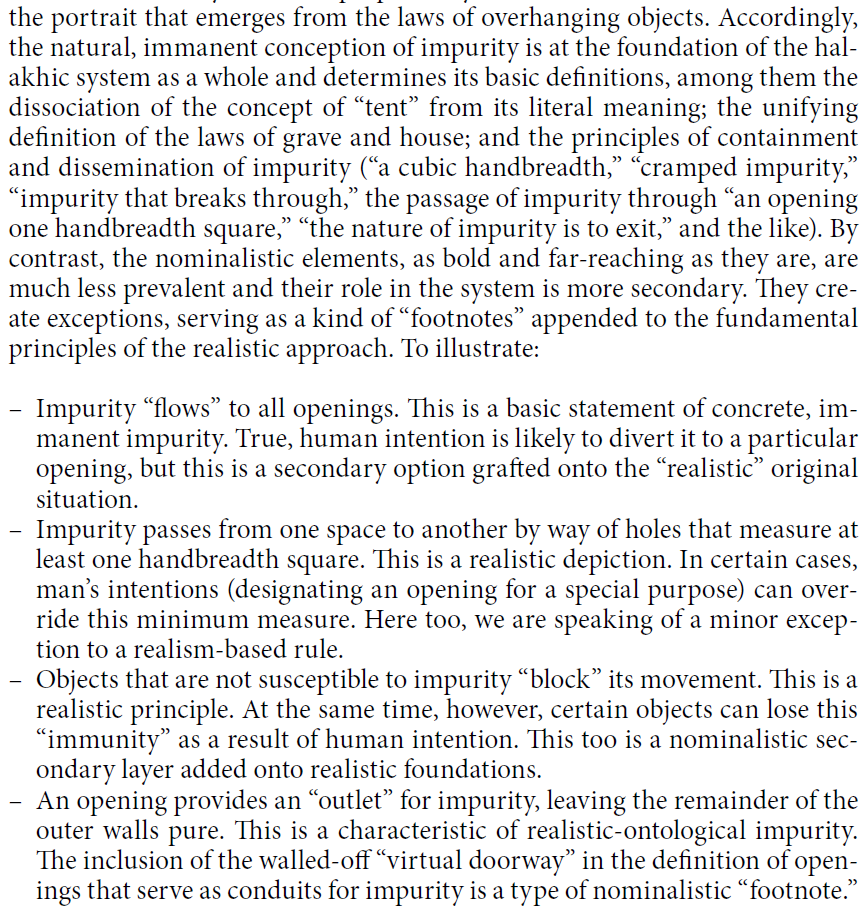
- Dr. Vered Noam, “Ritual Impurity in Tannaitic Literature: Two Opposing Views,” p. 96
- Dr. Yechezkel Kaufmann, Israelite Religion, from its Beginnings to the Babylonian Exile, p55