





A heated argument over what constitutes a blemish in a firstborn animal reveals deeper tensions under the surface. Rabbi Akiva permits the animal and Rabbi Yohanan ben Nuri forbids it. Each accuses the other of bad behavior towards the Jews, but for different reasons:
“Rabbi Akiva said to Rabbi Yoḥanan ben Nuri: Until when will you consume the property of the Jewish people? Rabbi Yoḥanan ben Nuri said to Rabbi Akiva: Until when will you feed the Jewish people carcasses?” (Bechorot 40a)
Rabbi Akiva needs no introduction but his partner in this argument, Rabbi Yohanan ben Nuri, is slightly less famous. He was a third generation Tanna, a contemporary of Rabbi Akiva and a frequent disputant with him as we see here:
“Said R. Yohanan b. Nuri: I call Heaven and Earth to testify that more than four or five times was Akiva chastised on my behalf before Rabban Gamliel at Yavneh! For I complained against him, and [Rabban Gamliel] would chastise him. Yet I knew full well that, with each and every incident, his love [for me] would only increase. This illustrates what is said: “Do not rebuke a scorner, lest he hate you; rebuke a sage and he will love you!” (Prov. 9:8).” (Sifrei Devarim 1:8)
Rabbi Yohanan ben Nuri appears more than forty times in the Mishnah, as well as in the Tosefta and in Beraitot. He lived in the Galilee – we hear of him in Genigar in the Jezreel Valley, in Zippori and in Bet Shearim – and we know that on certain legal matters the Jews of the Galilee followed his rulings while the Jews in Judea listened to Rabbi Akiva, their “local” rabbi:
“HALAKHAH: In Judea one used to follow Rabbi Akiva and in Galilee Rabbi Joḥanan ben Nuri.” (Yerushalmi Rosh HaShanah 4:6)
We might assume that Rabbi Yohanan’s opinion invalidating the blemished firstborn meant that he was wealthy. Quite the contrary – he was so poor that he would go out to collect the final crops of Peah in order to have food to eat:
“Rabbi Joḥanan ben Nuri used to go out with the second wave of seekers and returned with his needs for the entire year.” (Yerushalmi Peah 8:10)
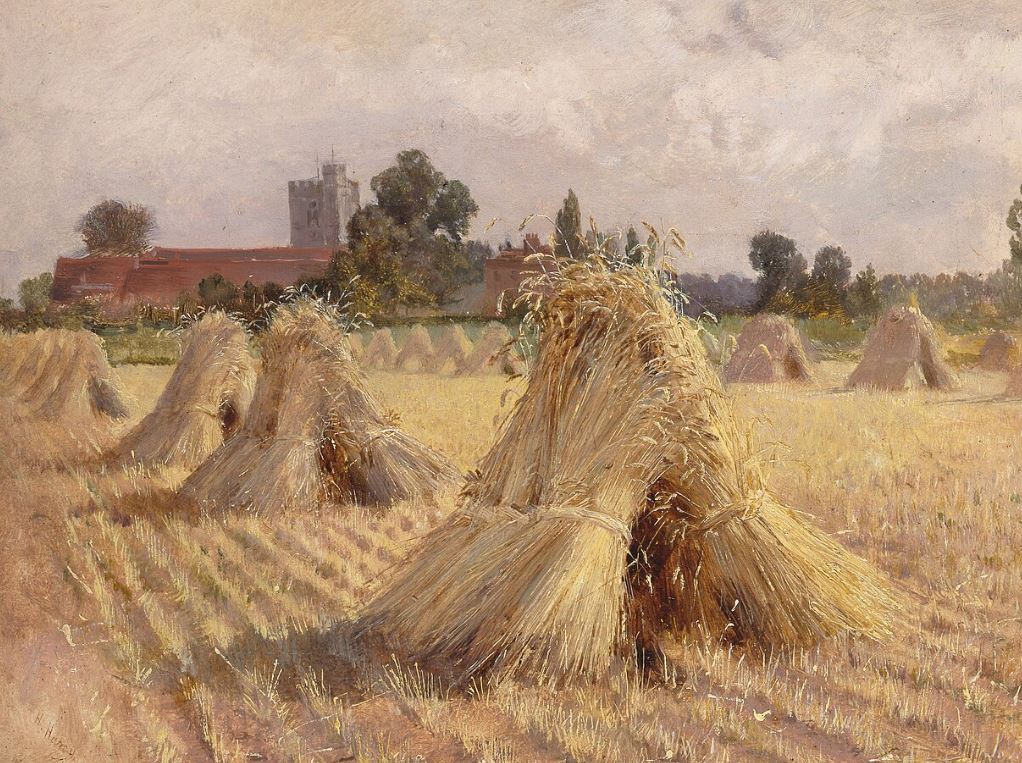
Yale Center for British Art, Public domain, via Wikimedia Commons
His poverty made him aware that Judaism had to be accessible to the average person. When the wealthy Rabbi Tarfon ruled that one can only use expensive olive oil to light his Shabbat candles, Rabbi Yohanan vehemently disagreed:
“Rabbi Tarfon says: One may only light with olive oil alone. Rabbi Yoḥanan ben Nuri stood on his feet and said: And what shall the people of Babylonia, who have only sesame oil, do? And what shall the people of Media, who have only nut oil, do? And what shall the people of Alexandria, who have only radish oil, do? And what shall the people of Cappadocia, who have neither this nor that but only naphtha, do?” (Shabbat 26a)
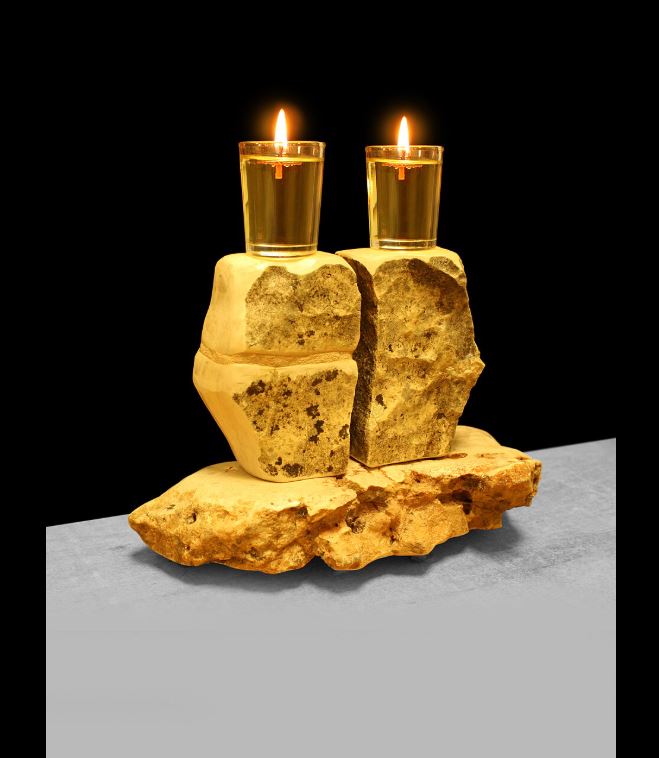
צלם, CC BY-SA 4.0 <https://creativecommons.org/licenses/by-sa/4.0>, via Wikimedia Commons
Eventually Rabban Gamliel provided him and his equally poor colleague Rabbi Elazar ben Hisma with positions in the yeshiva in Yavneh. However, when he visited them, Rabban Gamliel was dismayed at their deferential attitude to the students and explained that they had to lead and not be part of the crowd:
“Rabbi Yohanan ben Nuri, and Rabbi Elazar Hisma, were appointed by Rabban Gamliel to chair the session. But the disciples took no notice of them. . . . [This time] he entered and found Rabbi Yohanan ben Nuri, and Rabbi Elazar Hisma sitting near the disciples [as if they were disciples instead of Masters]. He said to them: Yohanan ben Nuri and Elazar Hisma! You are harming the public by failing to assert your authority over them! In the past you were beholden only to yourselves. But now, look! You are slaves indentured to the public!” (Sifrei Devarim 16)
Rabbi Yohanan protected the Jewish people in different ways, whether it was their money or their souls as we saw in Bechorot. He also defended Jewish women and would not allow them to be divorced just because of unsubstantiated rumors about them:
“Rabbi Akiva says that she must leave him only once the women who spin by the moonlight converse about her. Rabbi Yoḥanan ben Nuri said to him: If so, you have not allowed any daughter of Abraham our forefather to remain with her husband,” (Gittin 89a)
His loyalty to Rabban Gamliel was perhaps out of a sense of personal debt but also because he believed that the head of the Sanhedrin deserved the scholars’ respect. He refused to allow Rabbi Yehoshua to change Rabban Gamliel’s ruling after his death:
“Following the death of Rabban Gamliel, Rabbi Yehoshua entered the study hall to annul Rabban Gamliel’s statement [with regard to fasts]. Rabbi Yoḥanan ben Nuri stood on his feet and said: I see that the body must follow the head. All of Rabban Gamliel’s life we established the halakha in accordance with his opinion, and now you seek to annul his statement? Yehoshua, we do not listen to you, as the halakha has already been established in accordance with the opinion of Rabban Gamliel. And there was no one who disputed this statement in any way.” (Eruvin 41a)
Rabbi Yohanan ben Nuri’s influence was felt mainly in the world of halacha. It is there that he expressed his opinions and helped the Jewish people find their way forward in the tumultuous years after the destruction of the Second Temple. But we do have a few statements that indicate how he felt a Jew should behave. Rabbi Yohanan believed in a Torah of “pleasant ways,” a Torah that saw anger as almost akin to idolatry:
“Rabbi Shimon ben Elazar says in the name of Ḥilfa bar Agra, who said in the name of Rabbi Yoḥanan ben Nuri: One who rends his garments in his anger, or who breaks his vessels in his anger, or who scatters his money in his anger, should be like an idol worshipper in your eyes” (Shabbat 105b)
Let his warning about anger be a prescription for us in our own tumultuous days of elections.

The traditional site of Rabbi Yohanan’s grave in Tiberias
Shalomori123, CC BY-SA 4.0 <https://creativecommons.org/licenses/by-sa/4.0>, via Wikimedia Commons