





Taxman? Meter maid? Or police officer? Who is the mysterious kasdor/quaestor? We come across him in a Mishnah in Bechorot where he seems overly interested and invested in the firstborn ram:
“MISHNA: There was an incident involving an old ram whose hair was dangling. And one quaestor [kasdor] saw it and said to its owner: What is the nature of this? They said to him: It is a firstborn, and it may be slaughtered only if it has a blemish. The quaestor took a dagger and slit its ear. And the incident came before the Sages and they deemed its slaughter permitted.” (Bechorot 35a)
The quaestor, from the Latin for inquire, was an official in the Roman Empire’s vast administrative system. His role seems to have developed and changed over time. As the name indicates, at one point he was a inquisitor, or as we would call him, an investigator of crimes. Sometimes he was also the prosecutor. His job was different at different periods of the Roman Empire. It also varied depending on if he was based in Rome or in one of Rome’s colonies. In the provinces the job usually was defined as a financial one. The quaestor collected taxes, disbursed salaries and inventoried goods that were collected as tax to Rome. He was considered one of the lower ranking officials but since he was often on his own on the frontier, he had many opportunities for putting money into his own pocket.
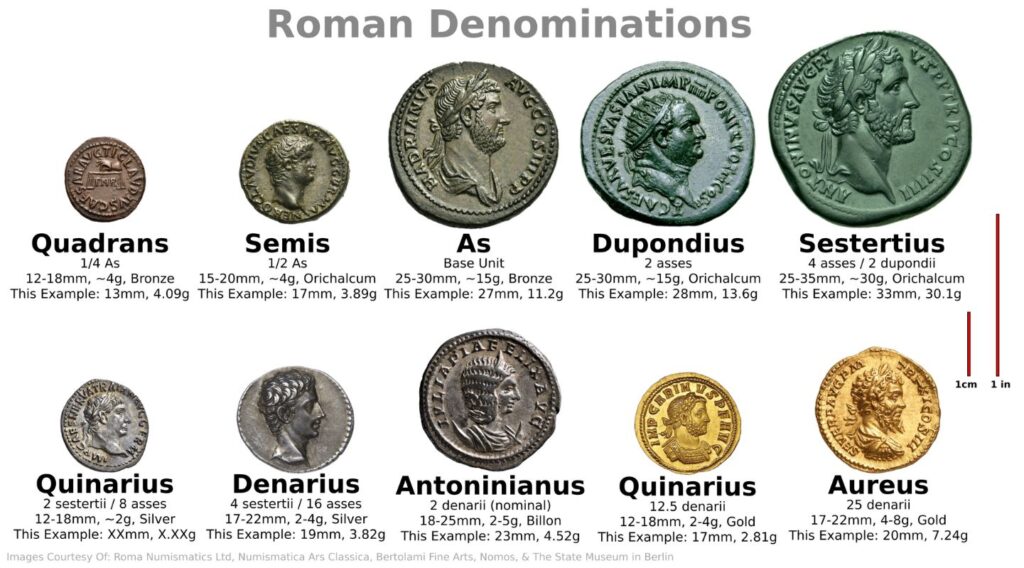
Trombonist04, CC BY-SA 4.0 <https://creativecommons.org/licenses/by-sa/4.0>, via Wikimedia Commons
Where does the quaestor appear in our sources and which of these roles apply in those stories? Here in Bechorot the quaestor seems to be looking at things from a financial perspective, as the taxman. What is going on with this elderly ram, and how come I am not getting a cut (literally) from it? His involvement in making the blemish also seems to show that he got personal gain from this ram being slaughtered.
The quaestor appears in other situations as an official tasked with enforcing Rome’s anti-Jewish decrees, more like the policeman than the taxman. In the famous story of Elisha Baal Knafayim, Elisha the Man of Wings, the title character is hounded by a quaestor for daring to wear tefillin:
“And why did they call Elisha Man of Wings? Because on one occasion the evil kingdom of Rome issued a decree against Israel that they would pierce the brain of anyone who dons phylacteries., Elisha would don them and go out to the marketplace. One day, a quaestor [kasdor] saw him; Elisha ran from him, and the official ran after him. When the official reached him, Elisha removed the phylacteries from his head and held them in his hand. The officer asked him: What is that in your hand? Elisha said to him: It is a dove’s wings. He opened his hand, and, it was found to be a dove’s wings. Therefore they would call him Elisha, Man of Wings.” (Shabbat 49a)
In a similar story, the quaestor even infiltrates the Bet Midrash to make sure that no one there is saying Shema:
“Rabbi Meir said, “One time we were sitting in the Bet Midrash in front of Rabbi Akiva and we were reading the Shema, but we were not saying it loud enough to be able to hear ourselves, because of one quaestor [kasdor] who was standing by the door.” (Tosefta Berachot 2:13)
A tale that seems to encompass both roles: the taxman and the prosecutor, is this story that takes place in Tzippori. Here a quaestor is roaming the markets of Tzippori, a large and bustling area with many shops. He was presumably more interested in collecting taxes as well as fees for infractions, but there is a religious element as well, since he is fining someone who is inspecting mezuzot:
“an incident involving an examiner who was examining mezuzot in the upper marketplace of Tzippori and a quaestor [kasdor] found him and collected a fine of one thousand zuz from him.” (Yoma 11a)
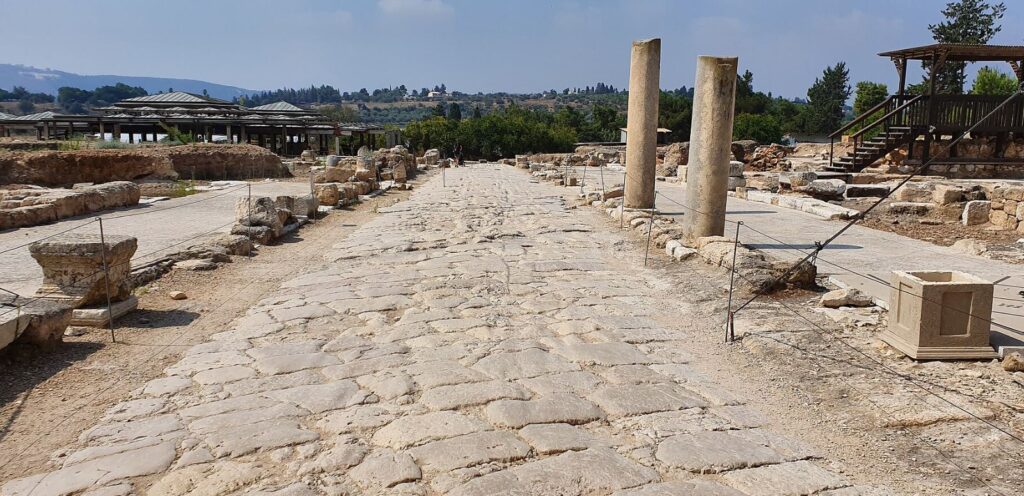
The Cardo of Tzippori
Yair Haklai, CC BY-SA 4.0 <https://creativecommons.org/licenses/by-sa/4.0>, via Wikimedia Commons
The quaestor was definitely not a beloved figure. At his best, he took your money, at his worst he could put you in jail or even have you executed. But the Jews understood that he was ultimately a lowly figure, bottom on the totem pole of Roman civil servants, even as he posed a threat to them. Perhaps that is why the midrash anachronistically uses the quaestor to show how unimportant Achashverosh was before he married Vashti in this sharply delivered message from her to him:
“She [Vashti] further sent him [Achashverosh] this message: ‘You utter fool! If your heart has been emboldened by wine, know that I am Queen Vashti, daughter of Belshazzar—son of Nebuchadnezzar. . . You were not even fit to serve as a quaestor [kasdor] racing before my father’s chariot!’ “(Yalkut Shimoni Esther 1049)
Quaestor, inquisitor, police officer or storm trooper – Jewish history has seen and weathered them all.