





A daf full of places in the Land of Israel – how exciting! All this geography is connected to the laws of animal tithing. To tithe your animals, they need to be (more or less) in one place. But what if your herd is scattered? The Baraita brings a case where someone had sheep in Kfar Hanania and sheep in Kfar Otnai. The two groups cannot be combined unless there is a sheep in the middle, in Zippori:
“If one had five sheep in Kfar Ḥananya and five sheep in Kfar Otnai, they do not combine, unless he also has one in Zippori.” (Bechorot 55a)
Zippori of course is well known (see here). But what of the other two towns? Kfar Hanania was a town on the border between the Lower and the Upper Galilee as we see here:
“From Kfar Hananiah upwards, the region where sycamores do not grow, is Upper Galilee. From Kfar Hananiah downwards, where the sycamores do grow, is Lower Galilee.” (Mishnah Sheviit 9:2)
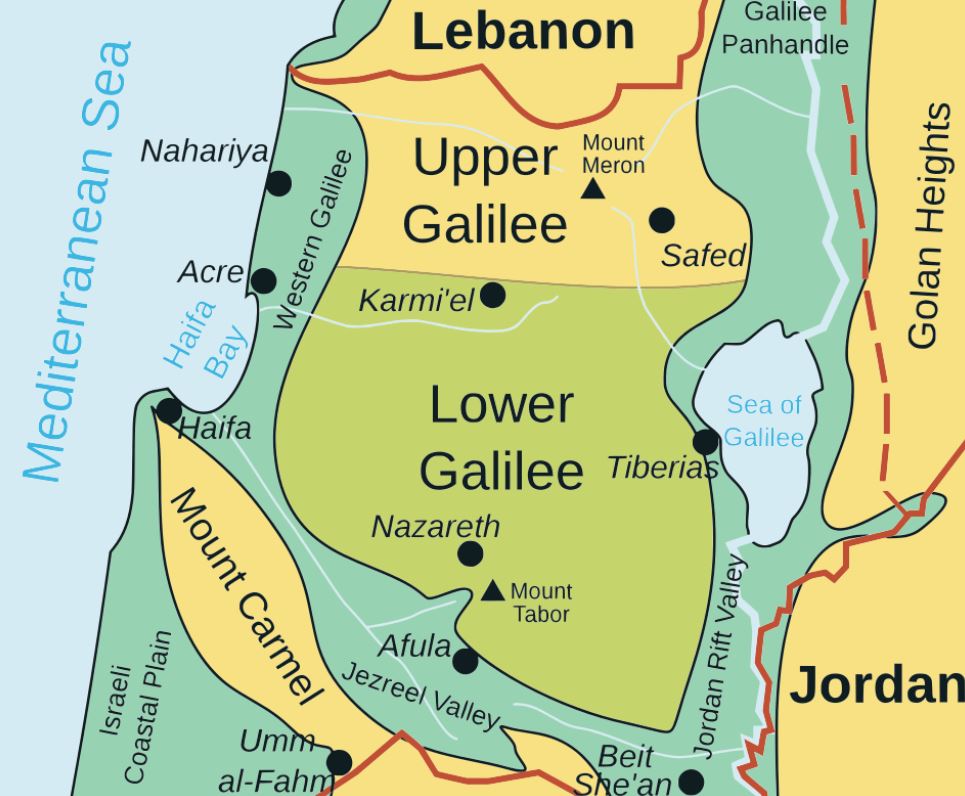
Dolní_Galilea.svg: Daniel Baránek derivative work: TheCuriousGnome, CC BY 3.0, via Wikimedia Commons
It was famous for its pottery which was considered to be strong and durable:
“Rabbi Yosei says: Even [earthenware] vessels from Kfar Shiḥin and vessels from Kfar Ḥananya do not typically break.” (Shabbat 120b)
Kfar Hanania was so full of pottery that the Rabbinic version of “bringing coals to Newcastle” or “selling ice to Eskimos” is to bring potters to Kfar Hanania:
“He said: ‘What, Joseph, are you bringing straw to Efraim, earthenware pots to Kfar Ḥanania, fleeces to Damascus, sorcery to Egypt – sorcery in a place of sorcerers?’” (Bereshit Rabba 86:5)
There were Sages who came from this village, like Rabbi Halafta:
“Rabbi Halafta of Kfar Hanania said: when ten sit together and occupy themselves with Torah, the Shechinah abides among them,” (Mishnah Avot 3:6)
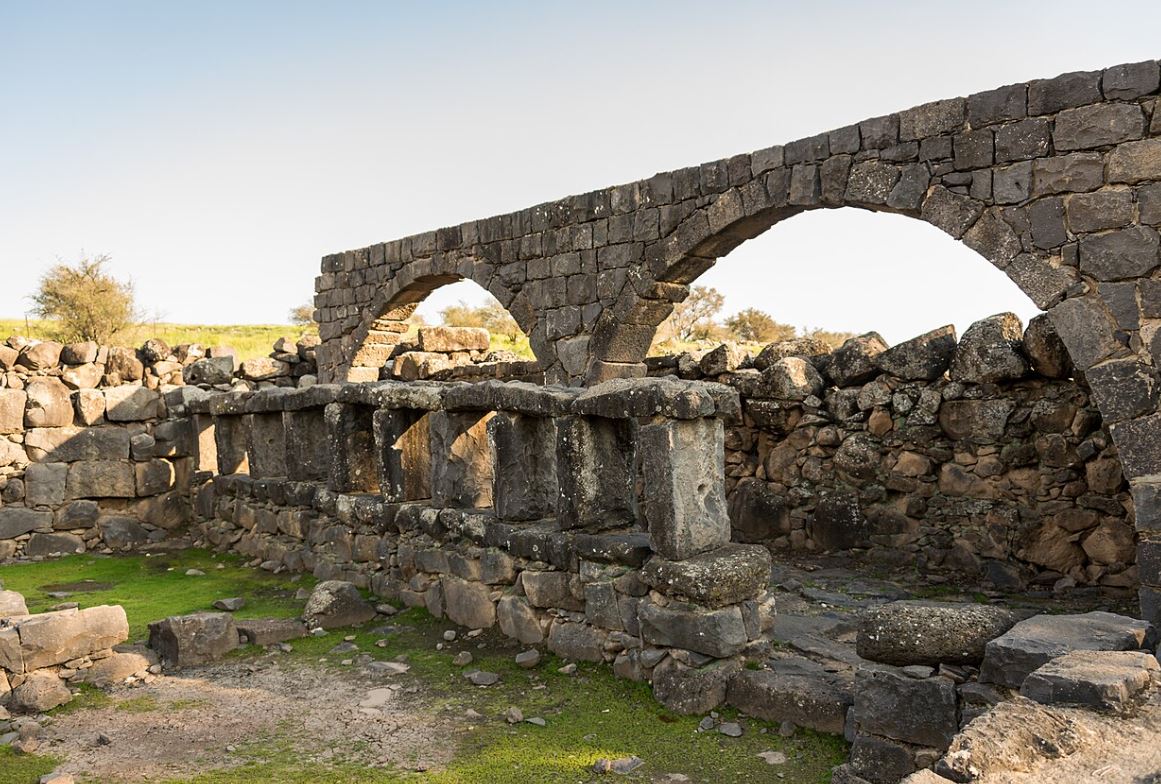
Kfar Hanania continued to exist almost until modern times. Rabbi Moshe Bassoula writes about it in the sixteenth century and tells how many of its residents were kohanim. Excavations done at the site reveal a furnace to fire pottery, which fits nicely with our sources. Today there is a modern Kfar Hanania slightly south of the ancient one.
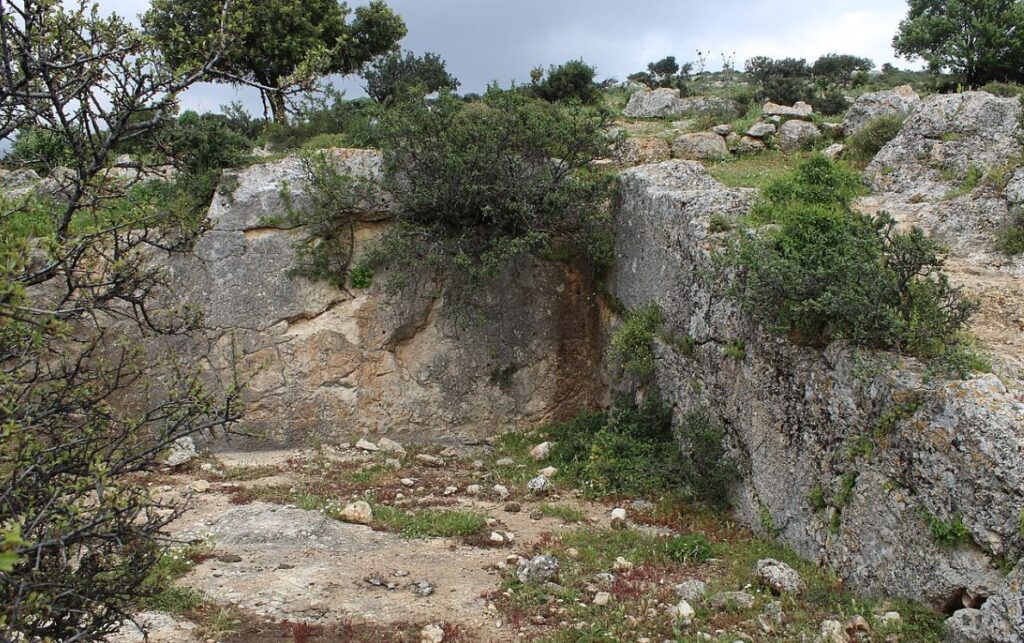
Walls of the ancient synagogue in the ruins of Kfar Hanania
Davidbena, CC BY-SA 4.0, via Wikimedia Commons
Kfar Otnai is traditionally identified with a site in the southern part of the Galilee, near the Jezreel Valley, adjacent to the significant Biblical tel of Megiddo. Because it was near the Shomron, Samaritans and Jews lived there together, as we see in this case of a bill of divorce brought before Rabban Gamliel:
“An incident occurred in which they brought a bill of divorce before Rabban Gamliel in the village of Otnai, and its witnesses were Samaritan witnesses, and he deemed it valid” (Mishnah Gittin 1:5)
Around the time of the Bar Kokhba revolt, the Sixth Roman Legion, Ferrata, was stationed at Kfar Otnai and the town got a new name: Legio, like legion. This name was preserved by the Arabs who called the place Lejun.
The legion chose Kfar Otnai because it was strategically located on the major thoroughfare of the Jezreel Valley. They built a large camp and left behind many artifacts for us to discover centuries later: roof tiles stamped with their symbol, coins and inscriptions. The camp is the only Roman legion camp preserved in its entirety in the Land of Israel. It survived until the fourth century. Today there is an Israeli prison on the site of part of the camp. Excavations were conducted inside the prison not so long ago and one of the earliest churches was discovered inside, with dedication inscriptions dating to the third century CE.
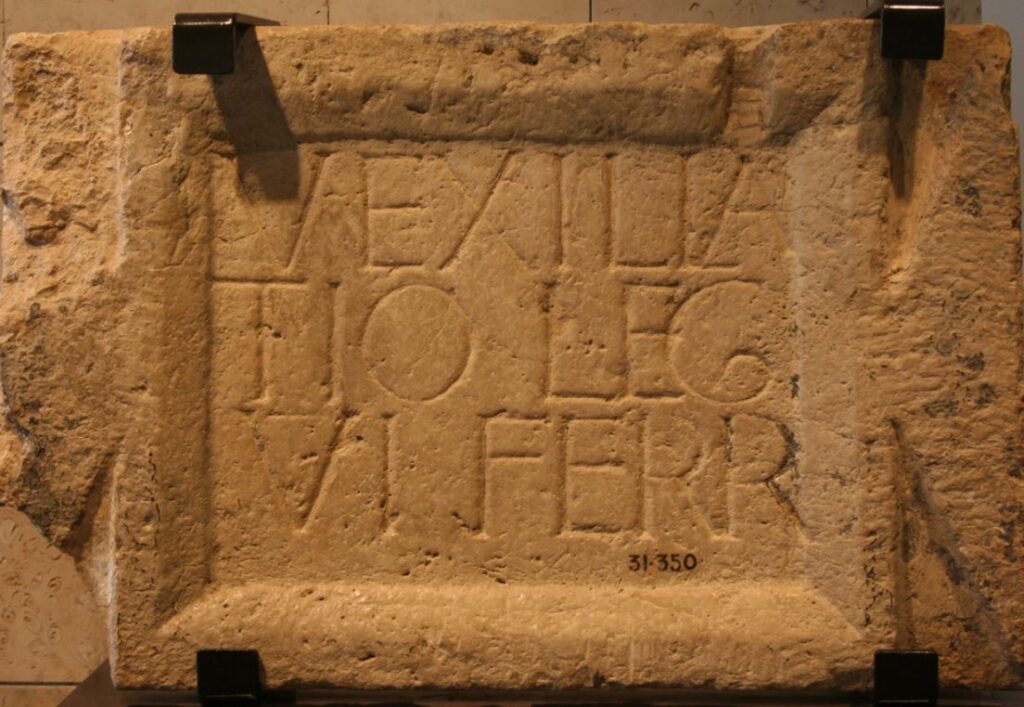
Inscription of the Sixth Legion
Golf Bravo 11:43, 25 May 2007 (UTC), CC BY-SA 3.0, via Wikimedia Commons
If we chart a path from Kfar Hanania to Kfar Otnai, Zippori is indeed right in the middle (the red location is Zippori):
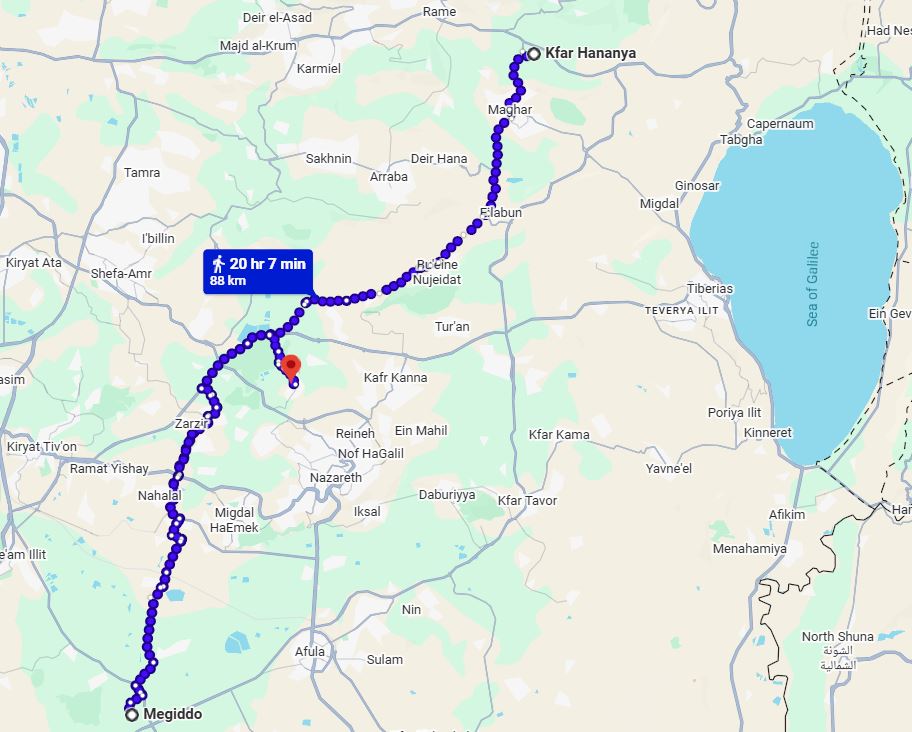
However, the distances are far greater than the thirty-two Roman miles that the Baraita requires. Perhaps the Baraita disagrees with the maximum distance that the Mishnah requires.
Another law about separated animals pertains to the Jordan. If the animals are separated by the river, they cannot be counted together. The Gemara describes the trajectory of the Jordan, and how it flows in and out of various bodies of water:
“The Jordan River issues forth from the Cave of Pamias and flows via the Sea of Sivkhi, and via the Sea of Tiberias, and via the Sea of Sodom, , and continues and falls to the Great Sea. But it is called Jordan only from Beit Jericho and below” (Bechorot 55a)
The Jordan is the one real river we have in Israel (as opposed to a wadi, a riverbed, which may or may not have water depending on the season and the rainfall). It begins in the far north of Israel, fed by three springs: the Banias, the Snir/Hatzbani and the Dan. The Banias is what the Gemara calls the Cave of Pamias. It then flows south and passes through the ”Sea of Sivchi.” This sea is no longer a sea and not even a lake. Today we call it the Hula Valley. The Hula was described as a lake but it really was more of a swamp. In the 1950s Israel drained most of it to use the land for agriculture. This was eventually seen as misguided and the Hula was partially reflooded.
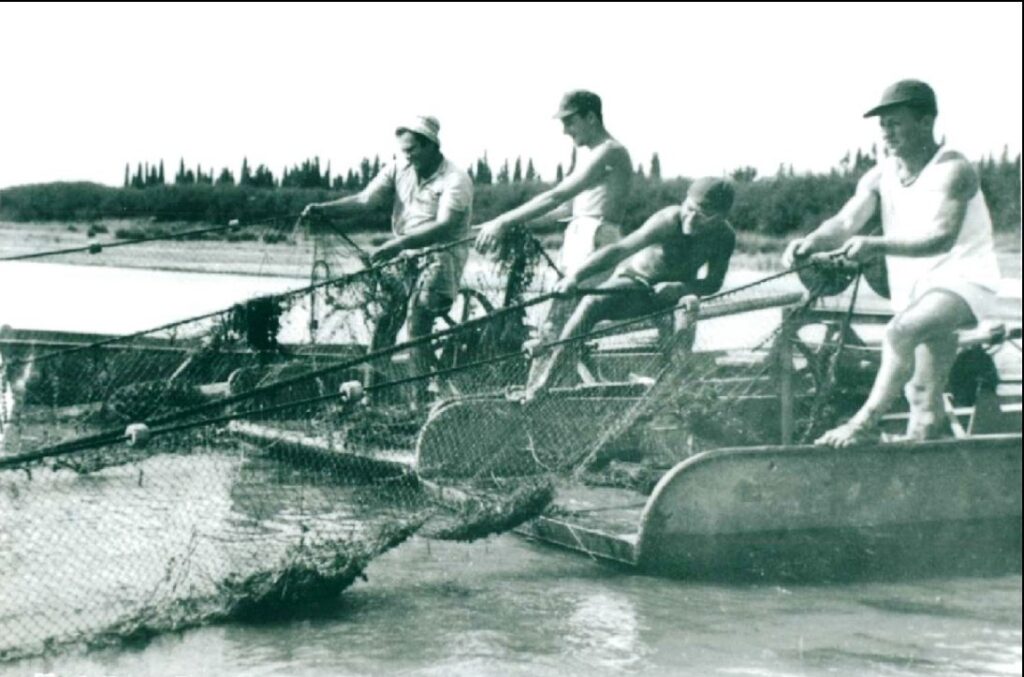
Fishermen at Lake Hula ca. 1943
Public domain, via Wikimedia Commons
The Jordan continues down to the Kinneret (the Sea of Tiberias) and then to its terminus at the Dead Sea (the Sea of Sodom). It is fed by more rivers on the way down: the Yarmuk and the Zarka on the eastern (Jordanian) side and other smaller streams on the western side like Nahal Harod and Nahal Tavor. The downward flow of the Jordan (the Dead Sea is the lowest point on earth) is perhaps what gave it its name: Yarden from yarad, to go down. The Gemara adds a Biblical reference to this idea; not only does the Jordan descend, it descends from Dan:
“Rabbi Ḥiyya bar Abba says that Rabbi Yoḥanan says: Why is the river called Jordan? Because it descends [yored] from the city of Dan.” (Bechorot 55a)
A lovely allegorical idea is that the water is living and good as long as it continues to flow and to give of itself. Once the water stops giving, at the Dead Sea, it dies. So too, we need to continually give if we want to keep our own life force going.
It is a good thing that the animals of our Gemara wandered off so that we could learn a little geography alongside our tithing laws.
Ggia, CC BY-SA 3.0, via Wikimedia Commons