
The Gemara in Chullin 33a discusses the rabbinic resolution that hands require washing before eating terumah. The reason behind this exposes rabbinic awareness that people are just people. We are forgetful and may not always notice what we are doing. This a cornerstone of rabbinic thought.
Chullin 33
sources:
- חולין לג.
מַתְנִי׳ הַשּׁוֹחֵט בְּהֵמָה חַיָּה וָעוֹף וְלֹא יָצָא מֵהֶן דָּם – כְּשֵׁרִים, וְנֶאֱכָלִין בְּיָדַיִם מְסוֹאָבוֹת, לְפִי שֶׁלֹּא הוּכְשְׁרוּ בַּדָּם. רַבִּי שִׁמְעוֹן אוֹמֵר: הוּכְשְׁרוּ בַּשְּׁחִיטָה.
MISHNA: In the case of one who slaughters a domesticated animal, an undomesticated animal, or a bird, and blood did not emerge from them during the slaughter, all of these are permitted for consumption and do not require the ritual washing of the hands as they may be eaten with ritually impure [mesoavot] hands, because they were not rendered susceptible to ritual impurity through contact with blood, which is one of the seven liquids that render food susceptible to impurity. Rabbi Shimon says: They were rendered susceptible to ritual impurity by means of the slaughter itself.
גְּמָ׳ טַעְמָא דְּלֹא יָצָא מֵהֶן דָּם, הָא יָצָא מֵהֶן דָּם – אֵין נֶאֱכָלִים בְּיָדַיִם מְסוֹאָבוֹת. אַמַּאי? יָדַיִם שְׁנִיּוֹת הֵן, וְאֵין שֵׁנִי עוֹשֶׂה שְׁלִישִׁי בְּחוּלִּין!
GEMARA: The reason that they may be eaten with ritually impure hands is that blood did not emerge from the animals or birds during the slaughter; but if blood emerged from them during slaughter, they may not be eaten with ritually impure hands. The Gemara asks: Why not? Ordinary hands are impure with second-degree ritual impurity and an item of second-degree impurity cannot impart third-degree impurity to non-sacred items with which it comes into contact.
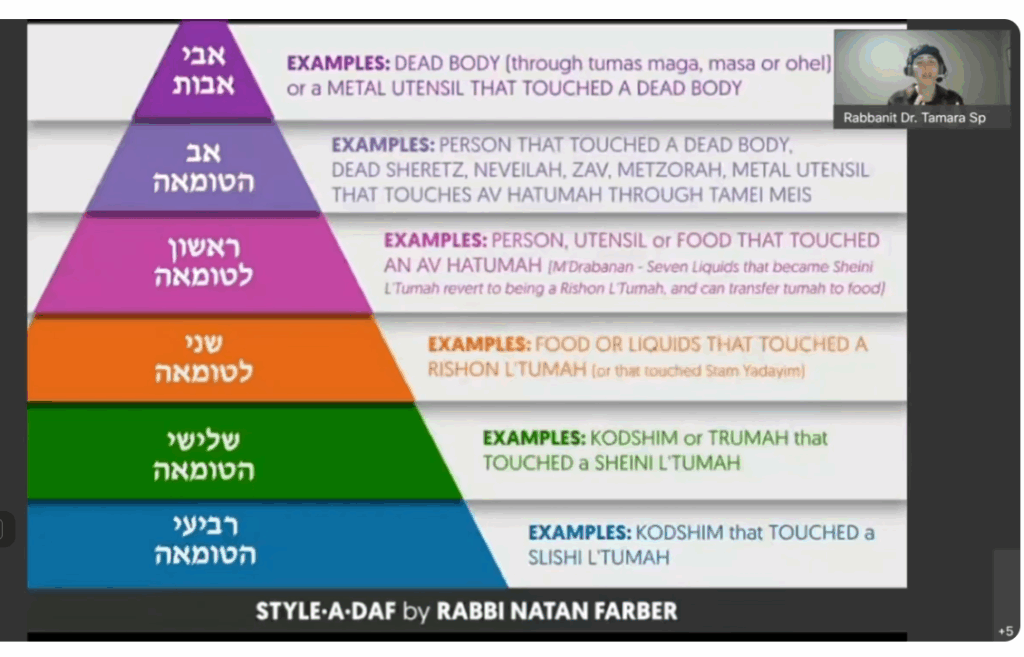
See also here for an introduction to tum’ah (ritual impurity) and taharah (ritual purity).
- בבלי שבת יג:
מַתְנִי׳ וְאֵלּוּ מִן הַהֲלָכוֹת שֶׁאָמְרוּ בַּעֲלִיַּית חֲנַנְיָה בֶּן חִזְקִיָּה בֶּן גָּרוֹן. שֶׁעָלוּ לְבַקְּרוֹ, נִמְנוּ, וְרַבּוּ בֵּית שַׁמַּאי עַל בֵּית הִלֵּל. וּשְׁמוֹנָה עָשָׂר דְּבָרִים גָּזְרוּ בּוֹ בַּיּוֹם.
…
מַאי נִינְהוּ שְׁמֹנָה עָשָׂר דָּבָר? דִּתְנַן, אֵלּוּ פּוֹסְלִין אֶת הַתְּרוּמָה: הָאוֹכֵל אוֹכֶל רִאשׁוֹן, וְהָאוֹכֵל אוֹכֶל שֵׁנִי, וְהַשּׁוֹתֶה מַשְׁקִין טְמֵאִין, וְהַבָּא רֹאשׁוֹ וְרוּבּוֹ בְּמַיִם שְׁאוּבִין, וְטָהוֹר שֶׁנָּפְלוּ עַל רֹאשׁוֹ וְרוּבּוֹ שְׁלֹשָׁה לוּגִּין מַיִם שְׁאוּבִין, וְהַסֵּפֶר, וְהַיָּדַיִם, וְהַטְּבוּל יוֹם, וְהָאוֹכָלִים וְהַכֵּלִים שֶׁנִּטְמְאוּ בְּמַשְׁקִין.
What are those eighteen matters? The Gemara answers: As we learned in a mishna, a list of the decrees that the Sages issued with regard to items whose level of impurity is such that if they come into contact with teruma they disqualify it. By means of that contact, the teruma itself becomes impure, but it does not transmit impurity to other items. These disqualify teruma: One who eats food with first degree ritual impurity status acquired as a result of contact with a primary source of ritual impurity, e.g., a creeping animal; and one who eats food with second degree ritual impurity status acquired as a result of contact with an item with first degree ritual impurity status; and one who drinks impure liquids of any degree of impurity; and one whose head and most of his body come into drawn water after he immersed himself in a ritual bath to purify himself; and a ritually pure person that three log of drawn water fell on his head and most of his body; and a Torah scroll; and the hands of any person who did not purify himself for the purpose of handling teruma; and one who immersed himself during the day, i.e., one who was impure and immersed himself, and until evening he is not considered completely pure; and foods and vessels that became impure by coming into contact with impure liquids.
2a. בבלי שבת יד.
וְהַיָּדַיִם — מִפְּנֵי שֶׁהַיָּדַיִם עַסְקָנִיּוֹת הֵן
And the hands; the reason that the Sages decreed impurity upon them is because hands are busy
2b. בבלי שבת יד:-טו.
וְיָדַיִם תַּלְמִידֵי שַׁמַּאי וְהִלֵּל גְּזוּר? שַׁמַּאי וְהִלֵּל גְּזוּר! דְּתַנְיָא: יוֹסֵי בֶּן יוֹעֶזֶר אִישׁ צְרֵידָה וְיוֹסֵי בֶּן יוֹחָנָן אִישׁ יְרוּשָׁלַיִם גְּזַרוּ טוּמְאָה עַל אֶרֶץ הָעַמִּים וְעַל כְּלֵי זְכוּכִית. שִׁמְעוֹן בֶּן שָׁטַח תִּיקֵּן כְּתוּבָּה לָאִשָּׁה, וְגָזַר טוּמְאָה עַל כְּלֵי מַתָּכוֹת. שַׁמַּאי וְהִלֵּל גָּזְרוּ טוּמְאָה עַל הַיָּדַיִם!
Among the list of items in the mishna with regard to which the disciples of Shammai and Hillel instituted decrees, were the hands of any person who did not purify himself for the sake of purity of teruma. If he came into contact with teruma, the Sages decreed it impure. The Gemara asks: And with regard to hands, was it the disciples of Shammai and Hillel who issued the decree of impurity? Shammai and Hillel themselves issued the decree. As it was taught in a baraita: Yosei ben Yo’ezer of Tzereida and Yosei ben Yoḥanan of Jerusalem decreed impurity on the land of the nations, that the land outside Eretz Yisrael transmits impurity; and they decreed impurity on glass vessels, even though glass is not listed in the Torah among the vessels that can become impure. Shimon ben Shataḥ instituted the formula of a woman’s marriage contract and also decreed special impurity on metal vessels. Shammai and Hillel decreed impurity on the hands.
וְכִי תֵּימָא שַׁמַּאי וְסִיעָתוֹ וְהִלֵּל וְסִיעָתוֹ, וְהָאָמַר רַב יְהוּדָה אָמַר שְׁמוּאֵל: שְׁמֹנָה עָשָׂר דָּבָר גָּזְרוּ, וּבִשְׁמֹנָה עָשָׂר נֶחְלְקוּ. וְאִילּוּ הִלֵּל וְשַׁמַּאי לֹא נֶחְלְקוּ אֶלָּא בִּשְׁלֹשָׁה מְקוֹמוֹת, דְּאָמַר רַב הוּנָא: בִּשְׁלֹשָׁה מְקוֹמוֹת נֶחְלְקוּ וְתוּ לָא. וְכִי תֵימָא: אֲתוֹ אִינְהוּ גְּזוּר לִתְלוֹת, וַאֲתוֹ תַּלְמִידַיְיהוּ וּגְזַרוּ לִשְׂרוֹף. וְהָאָמַר אִילְפָא: יָדַיִם תְּחִלַּת גְּזֵירָתָן לִשְׂרֵיפָה! אֶלָּא אֲתוֹ אִינְהוּ גְּזוּר וְלָא קַבִּלוּ מִינַּיְיהוּ, וַאֲתוֹ תַּלְמִידַיְיהוּ גְּזַרוּ וְקַבִּלוּ מִינַּיְיהוּ.
And if you say that the baraita is referring to Shammai and his faction and Hillel and his faction, didn’t Rav Yehuda say that Shmuel said: With regard to eighteen matters they issued decrees that day, and with regard to those eighteen matters they disagreed prior to that? The eighteen disputes were only between the disciples of Shammai and Hillel, whereas Hillel and Shammai themselves argued only in three places. Clearly, they were neither party to the disputes nor the decrees. As Rav Huna said: Shammai and Hillel disagreed in only three places and no more. And if you say that Hillel and Shammai came and decreed that teruma that came into contact with hands would be in abeyance, and their students came and decreed to burn teruma that came into contact with hands, then the following difficulty arises. Didn’t Ilfa, one of the Sages, say: With regard to hands, from the beginning their decree was that teruma that comes into contact with them is to be burned? According to Ilfa, there is no uncertainty. Teruma that came into contact with definite impurity is burned. Teruma that is in abeyance may not be destroyed. One must wait until it becomes definitely impure or decomposes on its own. Rather, the explanation is that they came and issued a decree and the people did not accept the decree from them, and their disciples came and issued a decree and they accepted it from them.
וְאַכַּתִּי, שְׁלֹמֹה גְּזַר! דְּאָמַר רַב יְהוּדָה אָמַר שְׁמוּאֵל: בְּשָׁעָה שֶׁתִּיקֵּן שְׁלֹמֹה עֵירוּבִין וּנְטִילַת יָדַיִם, יָצְתָה בַּת קוֹל וְאָמְרָה: ״בְּנִי אִם חָכַם לִבֶּךָ יִשְׂמַח לִבִּי גַם אָנִי״, ״חֲכַם בְּנִי וְשַׂמַּח לִבִּי וְאָשִׁיבָה חוֹרְפִי דָבָר״! — אֲתָא
The Gemara asks further: Still, the matter is not clear, as the decree of hands was issued by King Solomon. As Rav Yehuda said that Shmuel said: At the time that Solomon instituted the ordinances of eiruv and of washing hands to purify them from their impurity, a Divine Voice emerged and said in his praise: “My son, if your heart is wise my heart will be glad, even mine” (Proverbs 23:15), and so too: “My son, be wise and make my heart glad, that I may respond to those who taunt me” (Proverbs 27: 11). The Gemara responds: Came
2c. ט״ו א
שְׁלֹמֹה גְּזַר לְקׇדָשִׁים, וַאֲתוֹ אִינְהוּ וּגְזוּר אַף לִתְרוּמָה.
Solomon and decreed impurity on hands to prohibit contact with consecrated items, and Shammai, Hillel, and their disciples came and decreed impurity on hands even to prohibit contact with teruma.
- רש”י שבת יד.
עסקניות הן – ונוגעין בבשרו ובמקום טנופת וגנאי לתרומה בכך ונמאס לאוכלין כשנוגע בה בידים מסואבות ורבותינו מפרשים חיישינן שמא נגעו [ידיו] בטומאה [ונטמא] וקשיא לי אם כן ניחוש שמא נגע באב הטומאה ונמצא ראשון ויטמאנה ועוד מאי שנא ידים לחודייהו בכל גופו נגזור לפסול תרומה שמא נגעו ידיו בטומאה ונטמא כל גופו ועוד לא תסגי להו בנטילה אלא בטבילה:
- בית הבחירה של המאירי שבת יד.
הידים והוא שיתבאר למטה שבימי שלמה גזרו עליהן להיותן שניות מן הסתם כל שהסיח דעתו מהם אע”פ שלא ידע בטומאתן מצד שמועדות הם שלא ליזהר אלא מן הטומאות הגדולות והמפורסמות
- משנה זבים ה:יב
אֵלּוּ פוֹסְלִים אֶת הַתְּרוּמָה. הָאוֹכֵל אֹכֶל רִאשׁוֹן, וְהָאוֹכֵל אֹכֶל שֵׁנִי, וְהַשּׁוֹתֶה מַשְׁקִין טְמֵאִין, וְהַבָּא רֹאשׁוֹ וְרֻבּוֹ בְּמַיִם שְׁאוּבִין, וְטָהוֹר שֶׁנָּפְלוּ עַל רֹאשׁוֹ וְעַל רֻבּוֹ שְׁלשָׁה לֻגִּין מַיִם שְׁאוּבִין, וְהַסֵּפֶר, וְהַיָּדַיִם, וּטְבוּל יוֹם, וְהָאֳכָלִים וְהַכֵּלִים שֶׁנִּטְמְאוּ בְמַשְׁקִים:
The following disqualify terumah:One who eats foods with first degree uncleanness; Or one who eats food with second degree uncleanness; And who drinks unclean liquids. And the one who has immersed his head and the greater part of him in drawn water; And a clean person upon whose head and greater part of him there fell three logs of drawn water; And a scroll [of Holy Scriptures], And [unwashed] hands; And one that has had immersion that same day; And foods and vessels which have become defiled by liquids.
- ירושלמי חגיגה ב:ה
משנה: נוֹטְלִין לַיָּדַיִם לַחוּלִין וְלַמַּעֲשֵׂר וְלַתְּרוּמָה. וְלַקּוֹדֶשׁ מַטְבִּילִין. וְלַחַטָּאת אִם נִיטְמְאוּ יָדָיו נִיטְמָא גּוּפוֹ:
MISHNAH: One washes hands *The impurity of hands is rabbinic. Unless hands are consciously guarded from touching anything impure they are presumed to be impure in second degree and can be purified by having a quartarius (about 133 ml) of water poured over them. for profane food, tithe, and heave, but for sancta one immerses *The consumption of sancta requires not only a pure body, but if the eater’s hands were not consciously guarded from touching anything impure after he immersed his whole body in a miqweh, at the time of the meal his hands have to be immersed again in a minimum if 40 seah (about 510 l) of water.. And for the Red Cow if his hands became impure so became his body *Even if according to rabbinic rules the rabbinic impurity of his hands does not imply impurity of the body, for handling the ashes of the Red Cow or water containing such ashes he must be considered impure and therefore disqualified..
הלכה: וְיֵשׁ יָדַיִים לַחוּלִין. אֶלָּא כְרִבִּי שִׁמְעוֹן בֶּן אֶלְעָזָר. דְּרִבִּי שִׁמְעוֹן בֶּן אֶלְעָזָר אוֹמֵר. יֵשׁ יָדַיִים לַחוּלִין. דִּבְרֵי הַכֹּל הִיא. כְּדֵי שֶׁיְּהֵא בָדֵל מִן הַתְּרוּמָה. תַּנֵּי רִבִּי שִׁמְעוֹן בֶּן אֶלְעָזָר מִשּׁוּם רִבִּי מֵאִיר. הַיָּדַיִם תְּחִילָּה לַחוּלִין וּשְׁנִיּוֹת לַתְּרוּמָה. מַה. רִבִּי שִׁמְעוֹן בֶּן אֶלְעָזָר כְּרִבִּי עֲקִיבָה. דְּתַנִּינָן תַּמָּן. הַמַּכְנִיס יָדָיו לְבַיִת הַמְנוּגָּע יָדָיו תְּחִילָּה דִּבְרֵי רַבִּי עֲקִיבָה. וַחֲכָמִים אוֹמְרִים. יָדָיו שְׁנִיּוֹת. כְּרַבָּנִן הִיא תַמָּן. מַה טַעֲמוֹן הָכָא. מִתּוֹךְ שֶׁאַתְּ אוֹמֵר לוֹ. יָדָיו שְׁנִיּוֹת. אַף הוּא בָדֵל מִן הַתְּרוּמָה. וְלֹא מַחְמַת מַשְׁקֶה גָזְרוּ עֲלֵיהֶן. וְיִהְיוּ תְחִילָּה. (קוֹל) [קַל] וָחוֹמֶר. מָה אִם טְבוּל יוֹם שֶׁהוּא דְבַר תוֹרָה אֵינוֹ אֶלָּא פוֹסֵל. יָדַיִם שֶׁהֵן מִדִּבְרֵיהֶן לֹא כָל שֶׁכֵּן. דָּבָר אַחֵר. כְּלוּם גָּזְרוּ עַל הַיָּדַיִם לֹא כְדֵי שֶׁיְּהֵא בָדֵל מִן הַתְּרוּמָה. מִתּוֹךְ שֶׁאַתְּ אוֹמֵר לוֹ. יָדָיו שְׁנִיּוֹת. אַף הוּא בָדֵל מִן הַתְּרוּמָה.
HALAKHAH: Is hand-washing required for profane food? But it must follow Rebbi Simeon ben Eleazar, since Rebbi Simeon ben Eleazar says, hand-washing is required for profane food. It is everybody’s opinion, so he should separate from heave. Rebbi Simeon ben Eleazar stated in the name of Rebbi Meïr, hands are first degree impure for profane food and second degree impure for heave. Does Rebbi Simeon ben Eleazar follow Rebbi Aqiba, as we have stated there, “if somebody puts his hands into a leprous house, his hands are impure in the first degree, the words of Rebbi Aqiba, but the Sages are saying, his hands are impure in the second degree”? There, it follows the rabbis; what is their reason here? Since you tell him that his hands are impure in the second degree, he will separate from heave. But did they not decide about them because of fluids; then they should be impure in the first degree? It is an argument de minore ad majus. Since the Tevul Yom, which is a word from the Torah, only disqualifies, impure hands, which are from their words, not so much more? Another explanation: Did they not decide about hands only that he should separate from heave? Since you tell him that his hands are impure in the second degree, he will separate from heave.
- חולין קו.
אָמַר רַב אִידִי בַּר אָבִין, אָמַר רַב יִצְחָק בַּר אַשְׁיָאן: נְטִילַת יָדַיִם לְחוּלִּין, מִפְּנֵי סֶרֶךְ תְּרוּמָה.
§ Rav Idi bar Avin says that Rav Yitzḥak bar Ashiyan says: The obligation of washing hands before eating non-sacred food is due to an ancillary decree on account of teruma, the portion of produce designated for the priest, which must be consumed in a state of ritual purity. By rabbinic decree, one’s hands are considered impure with second-degree ritual impurity, as they may have touched impure items. Therefore, they render teruma impure. Consequently, priests who partake of teruma are obligated to wash their hands first. The Sages therefore decreed that all must wash their hands even before eating non-sacred food, so that people not become accustomed to eating without washing their hands, which would in turn lead the priests to partake of teruma without washing their hands.
וְעוֹד מִשּׁוּם מִצְוָה. מַאי מִצְוָה? אֲמַר אַבָּיֵי: מִצְוָה לִשְׁמוֹעַ דִּבְרֵי חֲכָמִים. רָבָא אָמַר: מִצְוָה לִשְׁמוֹעַ דִּבְרֵי רַבִּי אֶלְעָזָר בֶּן עֲרָךְ, דִּכְתִיב: ״וְכֹל אֲשֶׁר יִגַּע בּוֹ הַזָּב וְיָדָיו לֹא שָׁטַף בַּמָּיִם״. אָמַר רַבִּי אֶלְעָזָר בֶּן עֲרָךְ: מִכָּאן סָמְכוּ חֲכָמִים לִנְטִילַת יָדַיִם מִן הַתּוֹרָה.
And the obligation is further due to its being a mitzva. The Gemara asks: What mitzva does it involve? Abaye says: It is a mitzva to listen to and obey the statements of the Sages, who instituted this washing of the hands. Rava says: It is a mitzva to listen to the statement of Rabbi Elazar ben Arakh, as it is written with regard to a man who experiences a gonorrhea-like discharge [zav]: “And whomever he that has the issue touches, without having rinsed his hands in water,” he contracts ritual impurity (Leviticus 15:11), and Rabbi Elazar ben Arakh says: From here the Sages based washing of the hands upon a verse from the Torah.
אֲמַר לֵיהּ רָבָא לְרַב נַחְמָן: מַאי מַשְׁמַע? דִּכְתִיב ״וְיָדָיו לֹא שָׁטַף בְּמַיִם״, הָא שָׁטַף – טָהוֹר? הָא טְבִילָה בָּעֵי! אֶלָּא הָכִי קָאָמַר: וְאַחֵר שֶׁלֹּא שָׁטַף – טָמֵא.
Rava said to Rav Naḥman: From where is this inferred? How can this verse, which concerns a zav, be interpreted as referring to washing the hands before a meal? Rava explains: As it is written: “Without having rinsed his hands in water.” Consequently, one could infer that if he rinsed his hands the zav becomes ritually pure. But this cannot be correct, as verses elsewhere prove that a zav requires the immersion of his entire body. Rather, this is what the verse is saying: And there is another type of person who, if he has not rinsed his hands in water, is considered like one who is impure. The verse thereby serves as the basis for washing the hands.