Consumed by details of flour offerings, we have not mentioned where these offerings should go. Could it be that they can be brought to an alternate temple?
“MISHNA: One who says: It is incumbent upon me to bring a burnt offering, must sacrifice it in the Temple in Jerusalem. And if he sacrificed it in the temple of Onias in Egypt, he has not fulfilled his obligation. One who says: It is incumbent upon me to bring a burnt offering that I will sacrifice in the temple of Onias, must sacrifice it in the Temple in Jerusalem, but if he sacrificed it in the temple of Onias, he has fulfilled his obligation” (Menachot 109a)
The Gemara explains that this Onias was the son of Shimon the Righteous, the famous high priest who confronted Alexander the Great (Yoma 69a, also see here). We then hear two versions of a story of sibling rivalry over the high priesthood. While Onias’ personal actions were questionable, one opinion in the Gemara sees his Temple as actually fulfilling a prophecy of Isaiah:
“Onias went to Alexandria in Egypt and built an altar there, and sacrificed offerings upon it for the sake of Heaven. As it is stated: ‘In that day shall there be an altar to the Lord in the midst of the land of Egypt, and a pillar at its border, to the Lord’ ” (Isaiah 19:19). (Menachot 109b)
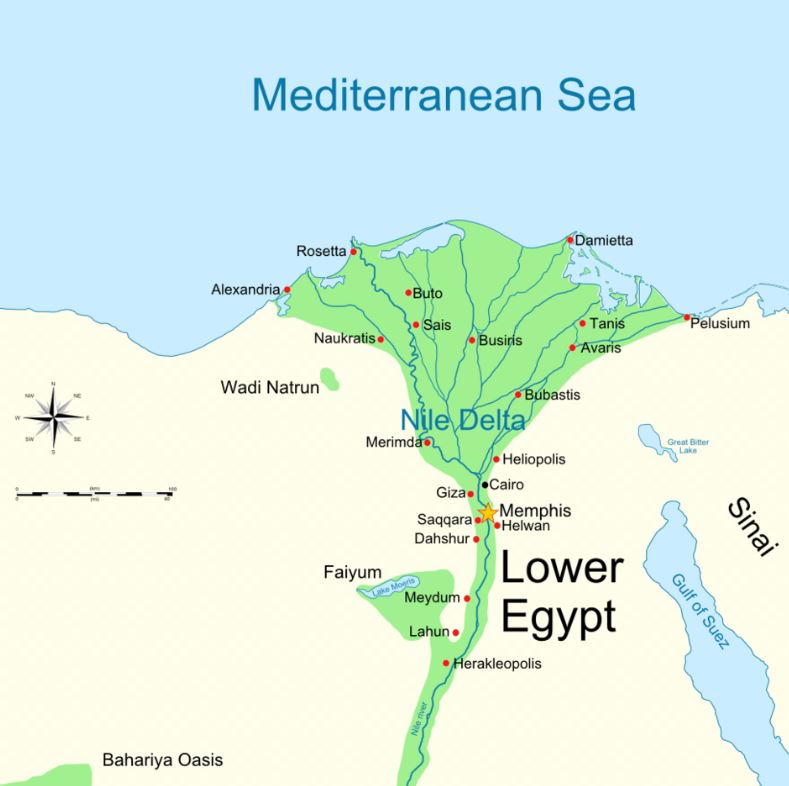
Onias’ temple was in the area of Heliopolis
Ancient_Egypt_map-en.svg: Jeff Dahlderivative work: MinisterForBadTimes, CC BY-SA 3.0 via Wikimedia Commons
Josephus also mentions Onias’ temple in two of his works, Antiquities of the Jews and The Jewish War. Curiously, he begins War and ends it with Onias, perhaps suggesting the importance of Jewish life in the Diaspora:
“Onias, the son of Simon, one of the Jewish high priests, fled from Antiochus, the King of Syria, when he made war with the Jews, and came to Alexandria. And as Ptolemy received him very kindly, on account of his hatred to Antiochus, he assured him, that if he would comply with his proposal, he would bring all the Jews to his assistance. And when the King agreed to do it, so far as he was able; he desired him to give him leave to build a temple somewhere in Egypt, and to worship God according to the customs of his own country. . Where Onias built a fortress; and a temple,. . . Yet did not Onias do this out of a sober disposition. But he had a mind to contend with the Jews at Jerusalem; and could not forget the indignation he had for being banished thence. Accordingly he thought, that by building this temple he should draw away a great number from them to himself.” (Josephus The Jewish War 7:10)
There are a few background pieces to understanding the saga of Onias. One is that there is an important and powerful Jewish community in Egypt, existing since the destruction of the First Temple (see here). Egyptian Jews wanted to continue to serve God even though they were far from Jerusalem. Another element to the story is that it takes place sometime in the second century BCE. At this time, the Greeks led by Antiochus IV have desecrated the Temple and then been defeated by the Hasmoneans who take over the high priesthood. We are unsure when exactly it happened – before, during or after the Maccabean revolt, since the sources contradict each other. We do know that Onias’ Temple was destroyed around the year 70 CE, during the Great Revolt when the Romans destroyed the Temple in Jerusalem.
Finally, the story appears at a time when various other centers are competing for supremacy in the Jewish world. The Samaritans want Mount Gerizim to be the holy place. The community in Babylonia is just beginning to grow stronger. And perhaps there is a question about whether Jerusalem is still THE place, as we see in Rabbi Yitzchak’s opinion in Megillah (that he later retracts):
“Rabbi Yitzcḥak said: I heard that one sacrifices offerings in the temple of Onias in Egypt at the present time. He maintains that the temple of Onias is not a house of idol worship and he maintains that the initial consecration sanctified Jerusalem for its time and did not sanctify Jerusalem forever.” (Megillah 10a)
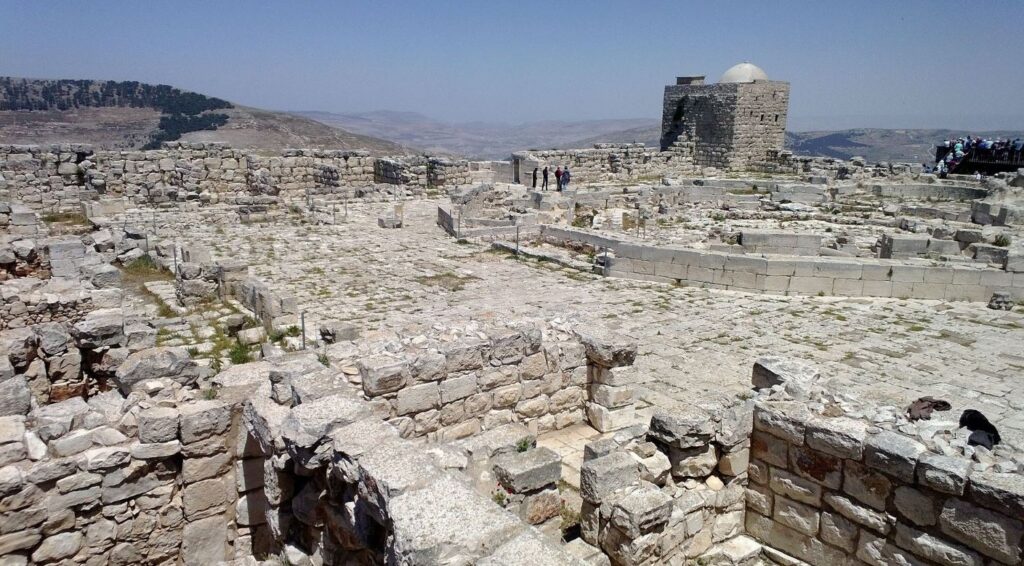
Mount Gerizim
Ovedc, CC BY-SA 3.0 https://creativecommons.org/licenses/by-sa/3.0, via Wikimedia Commons
What were Onias’ motives for making this alternate temple? The various stories and timelines suggest different possibilities. Sibling rivalry and perhaps a hatred of his fellow kohanim is the reason given in our Gemara,. However, Rabbi Yehuda also adds that Onias believed that he was fulfilling a Biblical prophecy. Interestingly, Josephus also talks about this prophecy, meaning this was an old idea, not one added later by the Gemara to justify Onias’ actions. Even more interesting is the interpretation of the verse preceding the one quoted by Rabbi Yehuda:
בַּיּ֣וֹם הַה֡וּא יִהְיוּ֩ חָמֵ֨שׁ עָרִ֜ים בְּאֶ֣רֶץ מִצְרַ֗יִם מְדַבְּרוֹת֙ שְׂפַ֣ת כְּנַ֔עַן וְנִשְׁבָּע֖וֹת לַיהֹוָ֣ה צְבָא֑וֹת עִ֣יר הַהֶ֔רֶס יֵאָמֵ֖ר לְאֶחָֽת׃
In that day, there shall be several towns in the land of Egypt speaking the language of Canaan and swearing loyalty to GOD of Hosts; one shall be called Town of Heres. (Isaiah 19:18)
“As Rav Yosef translates into Aramaic: Concerning the City of the Sun, which will be destroyed in the future, it will be said that it is one of them.” (Menachot 110a)
Rav Yosef plays with the word heres/cheres: cheres is sun, heres is destruction. The place where Onias builds his temple is near Heliopolis, the city of the sun!
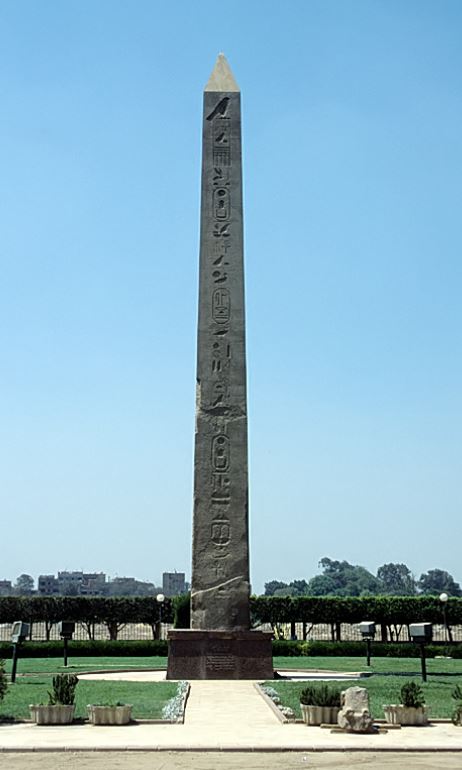
An ancient Egyptian obelisk in Heliopolis
Roland Unger, CC BY-SA 3.0 <https://creativecommons.org/licenses/by-sa/3.0>, via Wikimedia Commons
Another possible motive would be the desire to escape the Temple in Jerusalem that had been desecrated by the Greeks and to start fresh. This temple would also serve the growing Jewish community in Egypt.
However, if the story is happening after the Maccabean Revolt, perhaps Onias is rebelling not against the Greek invaders but against the Hasmonean kohanim who he sees as usurpers. Onias comes from the family of Zadok who believed that they were the only legitimate candidates for the high priesthood. This rift also led to much of Second Temple sectarianism.
So many possible motives, it is no wonder that it is unclear if this temple was for God or for idolatry. Do we have any archaeological remains of this controversial house of worship? In the beginning of the twentieth century the great Egyptologist William Flinders Petries excavated a site called Tel el Yehudiya (the tel of the Jews) north of Cairo, in a place called Leontopolis. He found graves with inscriptions, one of which referred to ארץ חניו, the land of Onias. Another had the name Phiabi, one of the priestly families. These are tantalizing hints that this was the site of Onias’ temple.
Menachot, like Zevachim, concludes by describing temples and altars besides the one in Jerusalem. Is the intention to show us that despite our yearning to worship locally, we need to stay with the one center in Jerusalem, even when we are dispersed throughout the world?
Hadran alach Masechet Menachot, may we merit to bring our menachot to the Temple in Jerusalem!