Have you ever said to someone: ‘don’t be so reckless, you’ll break your neck’? Our Gemara discusses whether a neck fracture can be fatal and brings the example of Eli the high priest in Shiloh:
“And if you say that the incident of the death of Eli, was one where the neck bone broke without the majority of the surrounding flesh being cut, [and nevertheless he died immediately], ]: Old age is different, as it is written: ‘And it came to pass, when he made mention of the Ark of God, that he fell from off his seat backward by the side of the gate, and his neck broke, and he died; for he was an old man, and heavy; and he had judged Israel forty years’ (I Samuel 4:18) “ (Chullin 21a)
Eli’s ignominious death is not the end of his tragic tale. His sons’ sins continue to haunt his family for generations. Who was Eli?
We first hear of Eli as a supporting actor in the story of Elkanah and Chana his barren wife (Samuel I chapters 1-2). We are at the end of the period of the Judges, a time of anarchy and lawlessness, and according to the Sages, a time where the Mishkan in Shiloh has lost some of its importance. Elkanah’s pilgrimage was meant to make it central again:
“Elkanah, his wife, his sons, his sisters, and all his relatives would go with him on a pilgrimage, and they would come and spend the night in the streets of a city, and the people would all be excited, and they would ask them where they were going, and they would say, ‘To the house of the Lord in Shiloh, from where the Torah and the commandments will come out. And why don’t you come with us and we will go together?’ Their eyes immediately shed tears, and they told them, ‘We will go with you.’ ” (Yalkut Shimoni 77)
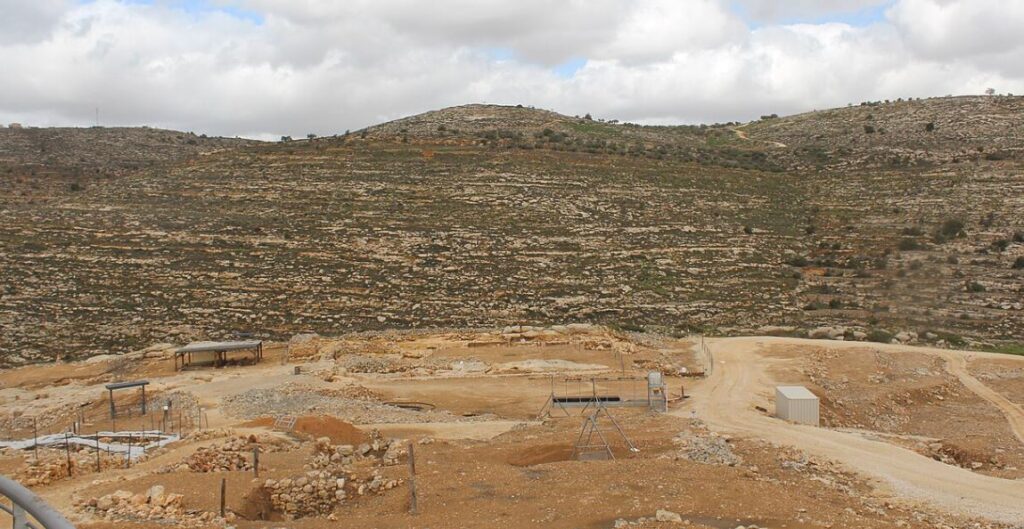
The Mishkan site in Shiloh
Deror Avi, CC BY-SA 4.0 <https://creativecommons.org/licenses/by-sa/4.0>, via Wikimedia Commons
When Chana goes into the sanctuary to pray for a child, Eli mistakes her silent prayer, an innovation at the time, for drunkenness:
“Now Chana was praying in her heart; only her lips moved, but her voice could not be heard. So Eli thought she was drunk” (Samuel I 1:13)
She corrects his mistake and he blesses her that she will have her prayer answered. When she does have a child, who she names Samuel/Shmuel, she fulfills the promise she made and brings him to serve under Eli in the Mishkan:
“It was this boy I prayed for; and God has granted me what I asked. I, in turn, hereby lend him to God.” (Samuel I 1:26)
Eli takes the young Samuel under his wing but he is less solicitous about his own sons. They take advantage of their priestly position to abscond with extra meat from the peoples’ sacrifices:
“This is how the priests used to deal with the people: Whenever anyone brought a sacrifice, the priest’s boy would come along with a three-pronged fork while the meat was boiling, and he would thrust it into cauldron, or the kettle, or the great pot, or the small cooking-pot; and whatever the fork brought up, the priest would take away” (Samuel I 2:13-14)
The text also adds another that they would behave inappropriately with the women who came to the Mishkan (Samuel I 2:22). What they actually did is debated by the Rabbis (Shabbat 55b) but their sins were clearly severe. Eli is told twice, once by an anonymous messenger and once by God through a prophecy to the young Samuel, that his family will be cursed by dying young:
“A time is coming when I will break your power and that of your father’s house, and there shall be no elder in your house.” (Samuel I 2:31)
After a terrible defeat of the Israelites in a battle with the Philistines, Eli’s sons are killed and the Ark of the Covenant is kidnapped to Philistine territory. When the messenger arrives breathless in Shiloh to tell the bad news, Eli is so shocked by the taking of the Ark that he falls and dies, as we saw in our Gemara. However, his line does not come to an end. His daughter in law gives birth to a son, named Ichavod איכבוד, lack of pride, because of the awful circumstances surrounding his birth (Samuel I 4:21).
Eli’s grandchild Ahituv, brother to Ichavod, had a son Ahimelech who served as the high priest in Nov, the place of the Mishkan after Shiloh was destroyed. The family curse continues when all the kohanim of Nov are murdered by King Saul because they helped David (Samuel I 22). But one son managed to escape:
“But one son of Ahimelech son of Ahituv escaped—his name was Evyatar —and he fled to David.” (Samuel I 22:20)
This Evyatar will eventually serve alongside his distant cousin Zadok, a descendant of Elazar, as priests to King David. They will bring him the Ark when he is running away from Avshalom but David will send them back to the city
“Then Zadok appeared, with all the Levites carrying the Ark of the Covenant of God; and they set down the Ark of God until all the people had finished marching out of the city. Evyatar also came up.” (Samuel I 15:24)
Evyatar seems to have escaped the family destiny. But then he makes a wrong move. He supports David’s son Adoniyah as the next king, and not Solomon. When Solomon begins his reign he sends for Evyatar and banishes him to Anatot, the priestly city in Benjamin:
“So Solomon dismissed Evyatar from his office of priest of God—thus fulfilling what God had spoken at Shiloh regarding the house of Eli.” (Kings I 2:27)
Centuries later, the prophet Jeremiah from Anatot will speak about the destruction of Shiloh and compare it to the future destruction of Jerusalem. Zeev Ehrlich explained that Jeremiah was from Eli’s line as well and he knew the family tales about Shiloh.
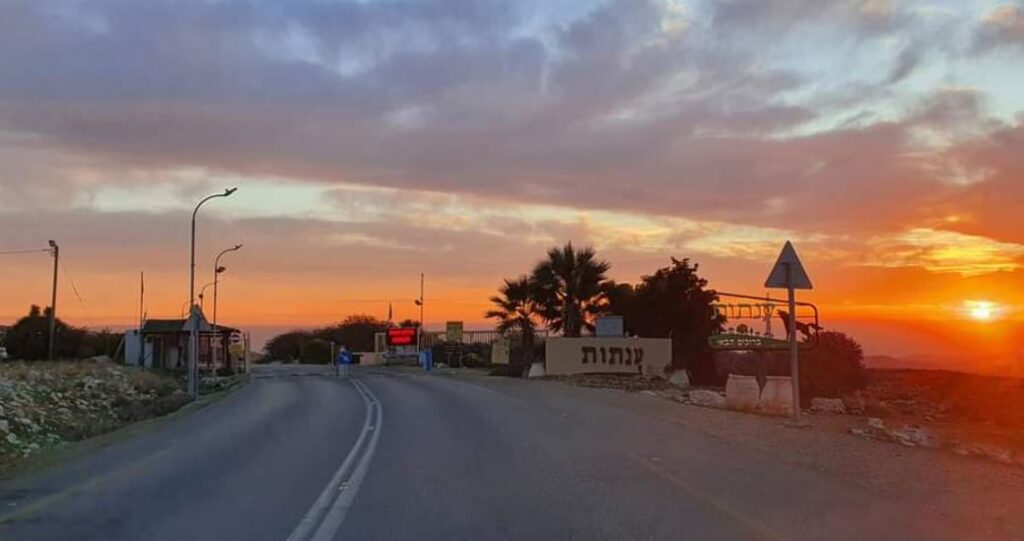
Anatot
I WANT TO EDIT 128, CC0, via Wikimedia Commons
Eli was a descendant of the second of Aaron’s sons, Itamar (Divrei haYamim I:24:3). Itamar’s line was secondary to his older brother Elazar’s and had only half the number of representatives working in the Temple (Divrei haYamim I:24:6). The kohanim from Zadok, Elazar’s descendant, become the primary ones in Second Temple times. But did Eli’s family line continue into Second Temple times and beyond? Chazal make the connection between people who died young and the decree:
“The Sages taught: There was a certain family in Jerusalem whose members used to die at the age of eighteen. They came and told Rabban Yoḥanan ben Zakkai. He said to them: Perhaps you are descended from the family of Eli,” (Rosh HaShanah 18a)
They also add that it is possible to lessen, if not entirely undo the decree by studying Torah and doing good deeds. The two most famous rabbis who were thought to descend from Eli, Rabba and Abaye, lived longer because of their meritorious behavior:
“Rabba and Abaye came from the house of Eli. Rabba, who engaged in Torah study, lived for forty years, Abaye, who engaged in both Torah study and in acts of kindness lived for sixty years.” (Rosh HaShanah 18a)
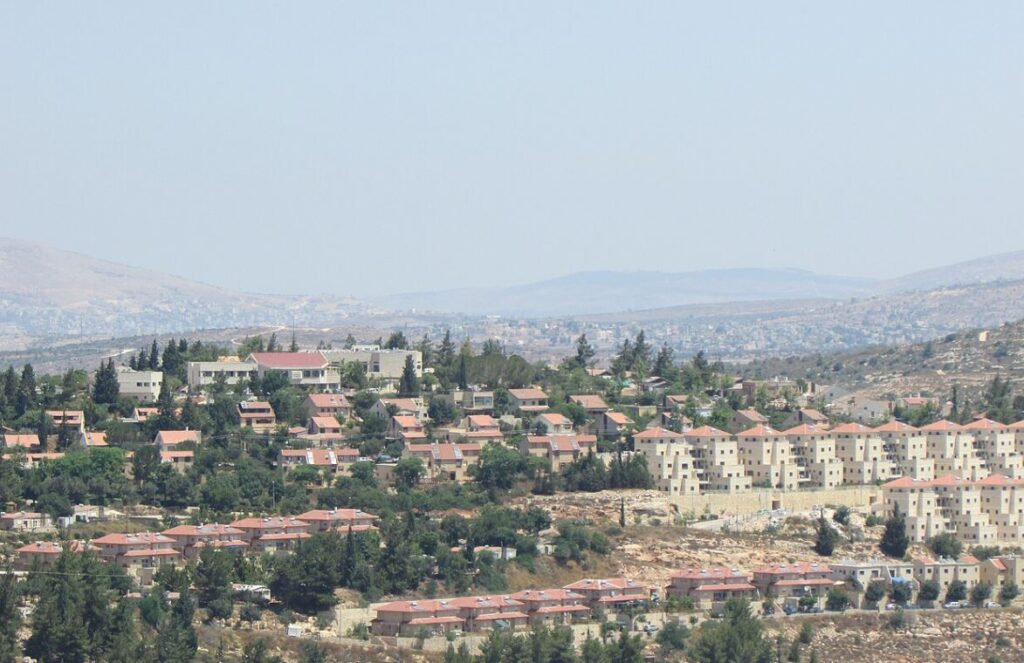
Today Eli’s name lives on in the large community just north of ancient and modern Shiloh.
עדירל, CC BY-SA 4.0 <https://creativecommons.org/licenses/by-sa/4.0>, via Wikimedia Commons