Yom Tov and Shabbat – similar but different. What happens when one segues into the other?
“MISHNA: Any situation where there is a tekia there is no havdalah. And any situation where there is havdalah recited, there is no tekia.” (Chullin 26b)
The tekia announces Shabbat’s beginning, the havdalah its end. That’s simple enough. Our Mishnah is explaining a more complex scenario – when Yom Tov falls out on Sunday or on a Friday (as we just had for Shavuot). In the former case, when Yom Tov is on Sunday, we make a form of havdalah but we do not announce Yom Tov with a tekia. And if Yom Tov precedes Shabbat, we do announce Shabbat with a tekia but we do not do any Havdalah between Yom Tov and Shabbat. What is the logic? The tekia is to stop a person from doing work forbidden on Shabbat. In the case of Yom Tov into Shabbat, one has to stop doing work permissible on Yom Tov (food preparation) and forbidden on Shabbat. In the opposite scenario, Shabbat into Yom Tov, we just need to separate the two days (havdalah) but not forbid work. Rabbi Dosa explains that we are separating between greater sanctity (Shabbat) and lesser (Yom Tov).
What did these two rituals entail? The tekia is the simpler one. We learn about how it was done when the Temple was standing:
“The Sages taught in a baraita: They sound six blasts on Shabbat eve The first blast is in order to stop the people from work in the fields. The second blast is to stop those who are working in the city. . . And he sounds a tekia, and sounds a terua, and sounds a tekia, and he accepts Shabbat.” (Shabbat 35b)
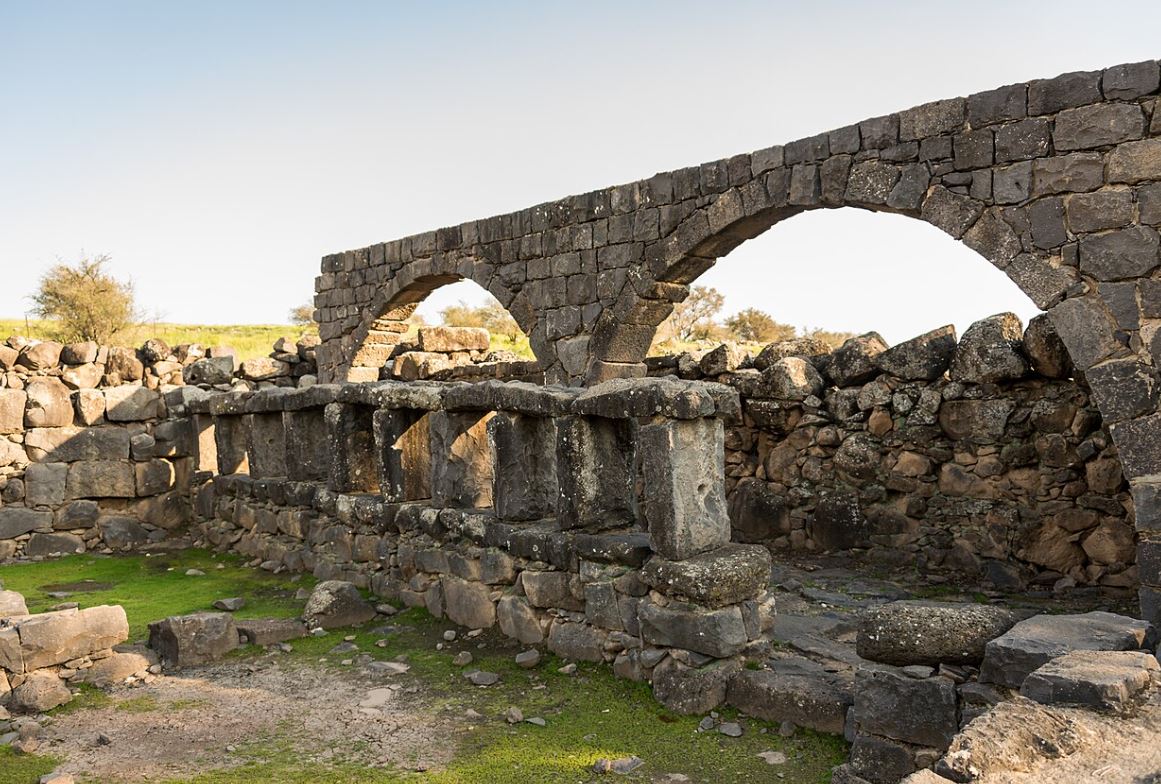
In the excavations at the foot of the Western Wall in Jerusalem, archaeologists found a stone that had carved on it lebait hatekiah leha. . , to the place of trumpeting to . . . the rest is cut off. This stone was placed high up, at the corner of the Western and Southern walls, in a place that would project the sound to all of Jerusalem.
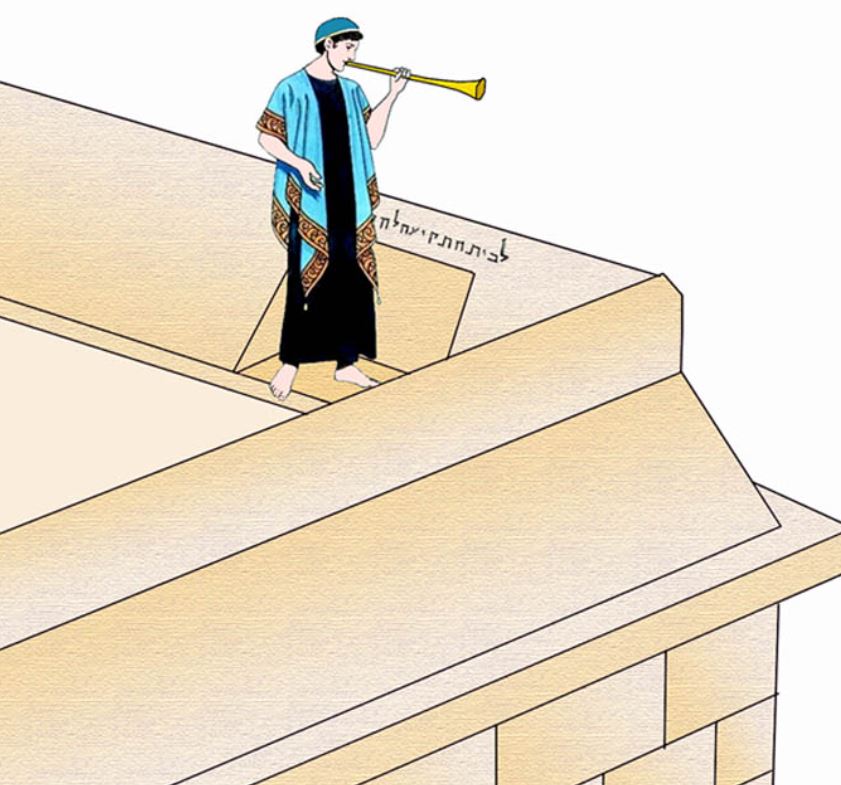
תמר הירדני, Attribution, via Wikimedia Commons
Havdalah is more complex but familiar to most of us as a ritual that we practice every week. The components include prayer (in the evening service), verses, blessings on wine, fire, spices and a final blessing on separation. The long prayer of Havdalah inserted between Shabbat and Yom Tov is described by the Rabbis as a pearl, a beautiful prayer (Berachot 33a). It enumerates no fewer than seven separations:
“And You our God, did distinguish between holiness and profaneness, between light and darkness, between Israel among the nations, between the seventh day and the six days of work, between the holy Shabbat and the holy Yom Tov You did distinguish, and the seventh day from the six days of work You did sanctify, You did separate and sanctify Your people Israel in Your holiness”
Tosafot (Pesachim 104a) explains the last two separations which seem redundant: seventh day and the six days of work here refers to the intermediate days of the holiday, chol hamoed, when work is permitted but not as much as it is on a regular weekday. Sanctifying Israel refers to the various groups of Jews: Kohen, Levi and Israel.
Wine is an integral part of havdalah and is often used in religious rituals but it originally was not included, because of its expense:
“Initially, [during the difficult, early years of the Second Temple], they established that havdalah is to be recited in the Amida prayer. Subsequently, when the people became wealthy, they established that havdalah is to be recited over the cup of wine. When the people became impoverished, they again established that it was to be recited in the Amida prayer.” (Berachot 33a)
The other two elements of havdalah, fire and spices, are not used when Yom Tov ends. The Gemara explains that fire was created on Motzai Shabbat and therefore we celebrate it at that time:
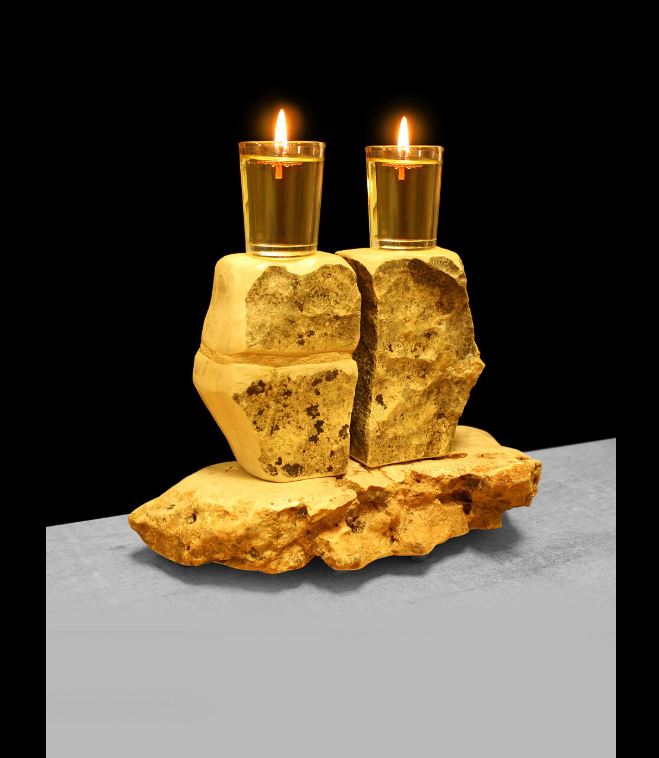
“At the conclusion of Shabbat, the Holy One, Blessed be He, granted Adam, the first man, creative knowledge similar to divine knowledge, and he brought two rocks and rubbed them against each other, and the first fire emerged from them.” (Pesachim 54a)
More prosaically, we use fire on Yom Tov to cook food so it is not an innovation to have fire after the holiday ends. On Shabbat however, we are forbidden from using fire so we bless its “return.” If someone does not have a candle, a fascinating midrash offers an alternative:
“If he has no fire, he puts forth his hand to the light of the stars, which are also fire,” (Pirkei deRabbi Eliezer 20)
One of the more unusual elements of havdalah is the blessing on spices. Why are spices necessary to see out the Shabbat? Tosafot (Betzah 33b) offers two possibilities. After Shabbat the fires of Hell, which had been resting, start up again and the spices cover up their stench The other, more positive idea explains that Shabbat, with its leisure, good food, prayer and study, gives us an extra boost, what the sources call a neshama yeteira, an additional soul. When Shabbat is over we are bereft so the spices serve to cheer us and revive us.
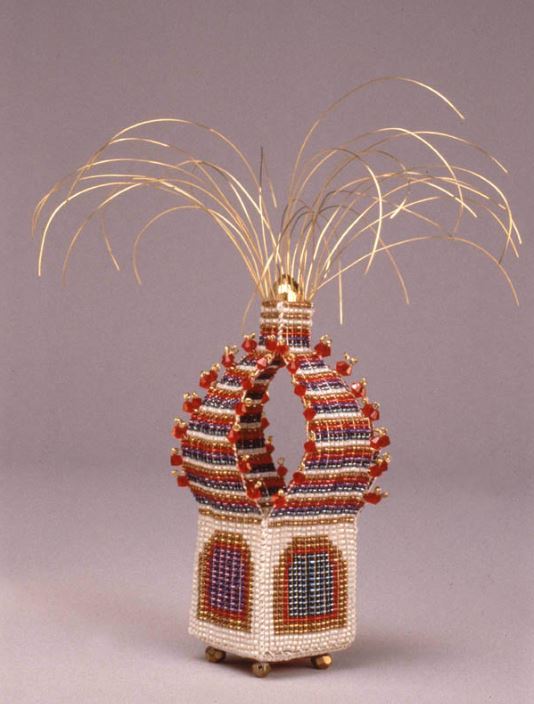
A particularly cheery spice box by Ina Golub
Center for Jewish History, NYC, No restrictions, via Wikimedia Commons
The latest addition to havdalah are the verses we recite in the beginning, like the first one from Isaiah:
הִנֵּ֨ה אֵ֧ל יְשׁוּעָתִ֛י אֶבְטַ֖ח וְלֹ֣א אֶפְחָ֑ד כִּֽי־עׇזִּ֤י וְזִמְרָת֙ יָ֣הּ יְהֹוָ֔ה וַֽיְהִי־לִ֖י לִישׁוּעָֽה׃
Behold the God who gives me triumph!
I am confident, unafraid;
For God is my strength and might,
And has been my deliverance.” (Isaiah 12:2)
These verses do not appear in the earliest prayerbooks, only in later ones. However, they fit with the idea of the spices: they are all about redemption and joy. Motzai Shabbat is a time that can be fraught with anxiety. We leave the restful and sanctified moments of Shabbat to enter the work week with its fears and doubts about livelihood, enemies and more. Havdalah, as the transitional time between these two states, includes ideas of protection and segulot – practices that were meant to ensure a good week. These include smelling the reviving spices, putting wine in one’s pockets (symbolizing wealth) or on the eyes (symbolizing health. All in the hopes of having a good week, a shavua tov, as we wish each other at the close of the ceremony.
One beautiful thought to carry into the week is this explanation about the practice of not handing around the havdalah wine to the members of the household. While it is important to emphasize the differences between holy and profane, Israel and the Gentiles, we do not want to emphasize or create divisions in the family. Here we are united and not separated.
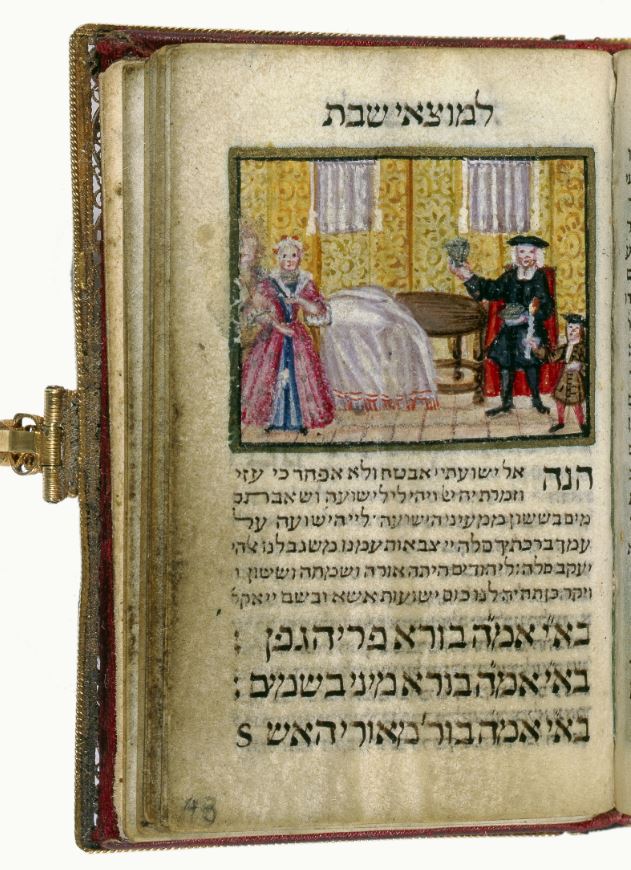
Seder Tikkunei Shabbat Aaron Wolf Herlingen 18th century
Israel Museum, Public domain, via Wikimedia Commons