Did you know that Israel is one of the most vegan-friendly countries in the world with about five percent of the population claiming to not eat any meat-based products? They may not know it, but all those vegans would feel at home in ancient Israel, where the consumption of meat was relatively rare. Our Mishnah informs us that there are four, perhaps five days a year when everyone ate meat:
MISHNAH: “On four occasions during the year one who sells an animal to another is required to inform him: I sold the mother to slaughter or I sold the daughter to slaughter. And those are: The eve of the last day of the festival of Sukkot, the eve of the first day of the festival of Passover, and the eve of Shavuot, and the eve of Rosh HaShana. And according to the statement of Rabbi Yosei HaGelili, the eve of Yom Kippur in the Galilee is included as well.” (Chullin 83a)
The average diet for most people in Mishnah times included the items that the Torah mentions as essential: bread, oil, fruits like the seven species, and (for men), wine. We see this in the list of basic requirements that a man must provide for his wife:
“If someone feeds his wife by means of a third party he may not give her less than two kav of wheat or four kav of barley a week for her sustenance . . . And he must give her half a kav of legumes, and half a log of oil, and a kav of dried figs or the weight of a maneh of fig cakes.” (Mishnah Ketubot 5:8)
This list is echoed in the requirements of feeding the poor in Mishnah Peah (8:5) as well as in the wisdom of Ben Sira:
“The basic needs of life are these: water, fire, iron, and salt,
flour, honey, and milk, wine, clothing, and oil.” (Ben Sira 39:26)
Meat, including fish and birds, was eaten but it was less common, reserved for Shabbat or for wealthy people. It was expensive and it made more sense to use an animal for work or products (eggs, milk) than to kill it and eat it. In addition, as we discussed in the introduction to Betzah, without refrigeration the only way you could slaughter a large animal was if you were having a feast or buying it together with other people. A wedding was another occasion for meat, since you needed to feed a crowd:
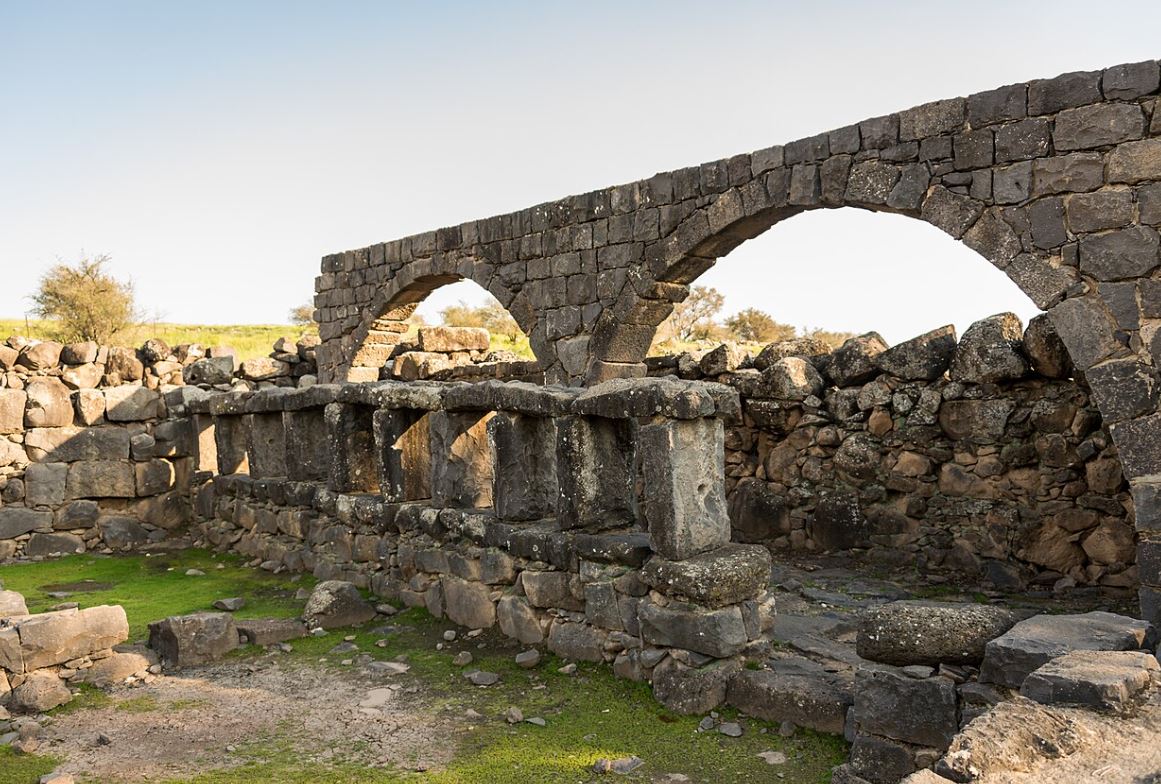
“Rabbi Akiva said: I asked Rabban Gamliel and Rabbi Yehoshua in the meat market in Emmaus, where they went to purchase an animal for the wedding feast of the son of Rabban Gamliel . . .” (Mishnah Keritot 3:7)
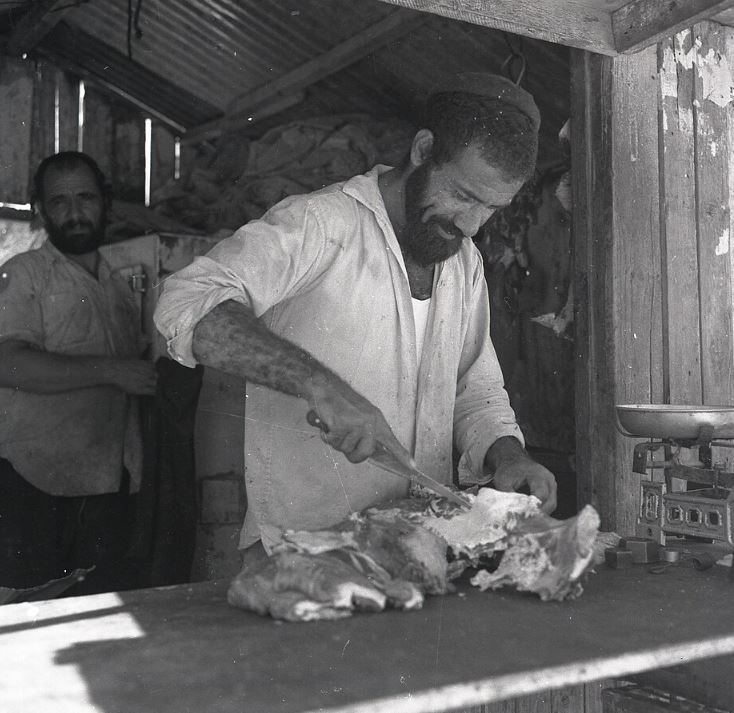
Boris Carmi /Meitar Collection / National Library of Israel / The Pritzker Family National Photography Collection, CC BY 4.0 via Wikimedia Commons
Diet was often determined by income and even the wealthier would restrict fish and meat to Shabbat:
“From here, Rabbi Elazar ben Azaria said: One who has one hundred dinars should purchase a litra of vegetables for his stewpot, one thousand dinars should purchase a litra of fish for his stewpot, five thousand dinars should purchase a litra of meat for his stewpot; and if one has ten thousand dinars, his servants should place a pot of meat on the stove for him every day. And with regard to these [other individuals mentioned by Rabbi Elazar ben Azaria], when, should they consume meat? Every Shabbat eve.” (Chullin 84a)
Pregnant women were encouraged to eat meat (Ketubot 60b) while sick people were discouraged (Berachot 57b). An extreme statement of Rabbi Judah the Prince says that only scholars should eat meat:
“Anyone who engages in Torah study is permitted to eat the meat of animals and fowl, and anyone who does not engage in Torah study is prohibited to eat the meat of animals or fowl.” (Pesachim 49b)
Explanations for this opinion range from the practical – the laws of shechita are complex and perhaps an am haaretz will inadvertently eat non-kosher meat – to the more spiritual – if you are not worthy of elevating the animal’s soul through your eating it, then you should not kill it.
An interesting side note is that while today we might think of meat as the most desirable and expensive food, followed by chicken and then fish, this hierarchy was not necessarily correct in Mishnah times. Here in the Tanhuma, meat is not even mentioned as the best food, while in a parallel passage in Bamidbar Rabba, fowl comes before meat:
“Thus if someone goes for lodging, and his host receives him; on the first day he receives him properly and feeds him fowl. Then on the second he feeds him fish; on the third he feeds him cheese; on the fourth he feeds him greens. So does he continue to reduce, until he is feeding him legumes” (Tanhuma Pinchas 17)
What made the four occasions in our Mishnah special enough to merit meat? Tosfot (Avoda Zara 5b) explains: Shmini Atzeret is considered its own holiday, separate from Sukkot, and a particular time of connection to God, Pesach is the time of redemption and Shavuot of receiving the Torah (no cheesecake!). Eating meat on Rosh haShanah was meant to be a sign that you will be prosperous and able to eat meat all year.
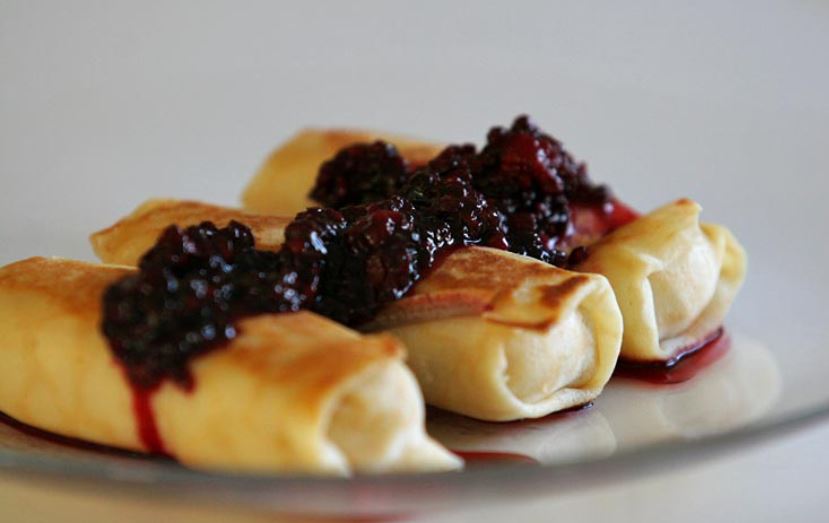
No blintzes in this Mishnah
Susánica Tam from Los Angeles, CA, United States, CC BY 2.0 <https://creativecommons.org/licenses/by/2.0>, via Wikimedia Commons
And what about the first night of Sukkot? Tosfot on our daf quotes Rabbenu Tam that erev Sukkot people are too busy building their sukkah and getting their four species to have time to slaughter a cow!
What about erev Yom Kippur? While we know it is considered a mitzvah to eat a lot before Yom Kippur (Yoma 81b), Rabbi Yosi haGelili’s stipulation about meat seems to have been limited to the Galilee. In other locations, people would eat fish on erev Yom Kippur, as we see in this midrash about a Jew in Rome who paid an exorbitant amount for a fish for his last meal before the fast:
“He said to him: ‘What did you see, Jewish tailor, that led you to eat a fish that cost twelve dinars?’ He said to him: ‘My master, we have one day [each year] that atones for us for all the sins we have performed all the days of the year. When it arrives, should we not accord it honor?’” (Bereshit Rabba 11:4)
Fish, fowl, flesh: just make sure you follow the halacha, and if you are a Jewish mother, that you have enough for everyone.
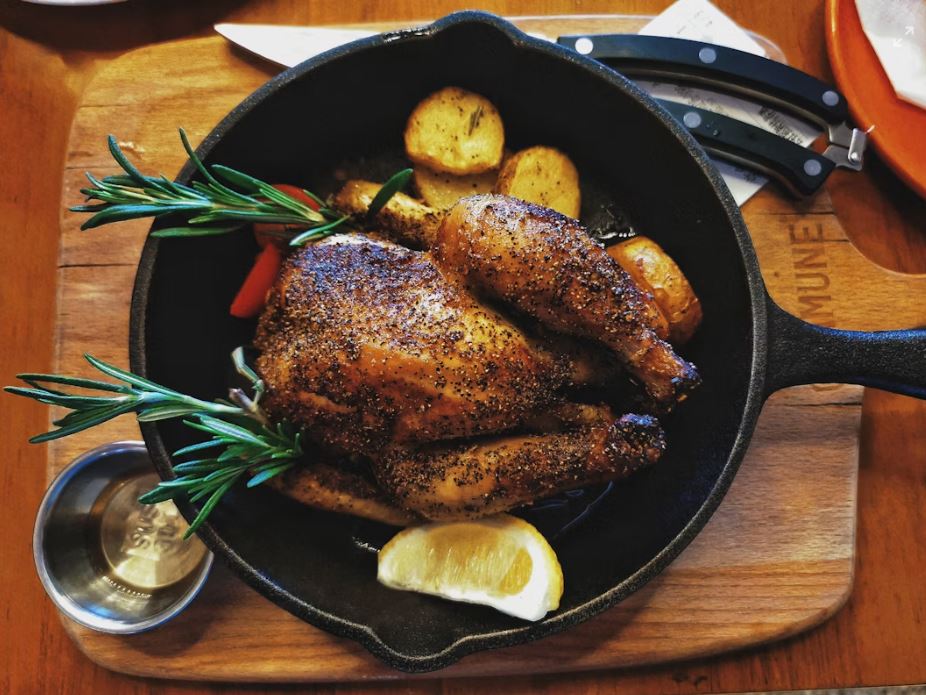
Cisco Lin UnSplash