Names can tell you a lot about a person. If you met someone named “the Babylonian” you would assume he was from Babylonia. But what if he was merely named for someone from Babylonia? That is the story in our Gemara:
“Rabbi Natan says: Once I went to the cities overseas, where one woman came before me who circumcised her first son and he died, her second son and he died, [and out of concern that circumcising her third son might cause him to die as well], she brought him before me. I saw that he was red, so I said to her: My daughter, wait for him until his blood is absorbed into him. She waited for him and then circumcised him, and he survived. And they would call him Natan the Babylonian after my name.” (Chullin 47b)
The original Natan was indeed from Babylonia. His father was an exilarch (Horayot 13b) and perhaps this illustrious background is why he received the surname “Babylonian” and his fellow immigrants (Rabbi Zeira, Rav and many others) did not. Rabbi Natan was a Tanna of the fourth generation (mid-second century CE), a crucial time period in the Land of Israel. The Sages were engaged in rebuilding the world of Torah after the debacle of the Bar Kokhba period. Rabbi Natan went to Usha where the Sages reconvened (see here). We do not know if he was already in the Land of Israel during the Bar Kokhba revolt but he certainly was able to attest to the Roman decrees against Judaism, as we see in this powerful passage:
“Rabbi Natan says: “for My lovers and the keepers of My mitzvoth”: the Jews who dwell in Eretz Yisrael, and give their lives for the mitzvoth. Why are you going out to be executed? Because I circumcised my son. Why are you going out to be burned? Because I read in the Torah. Why are you going out to be crucified? Because I ate matzoh. Why are you being given a hundred lashes? Because I took the lulav.” (Mechilta deRabbi Yishmael BaChodesh 6)
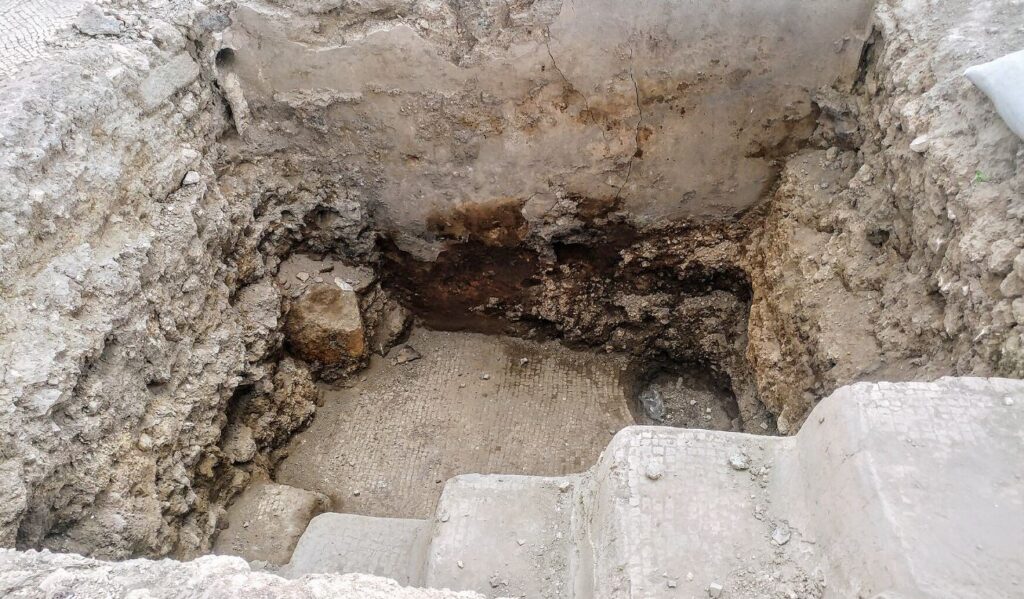
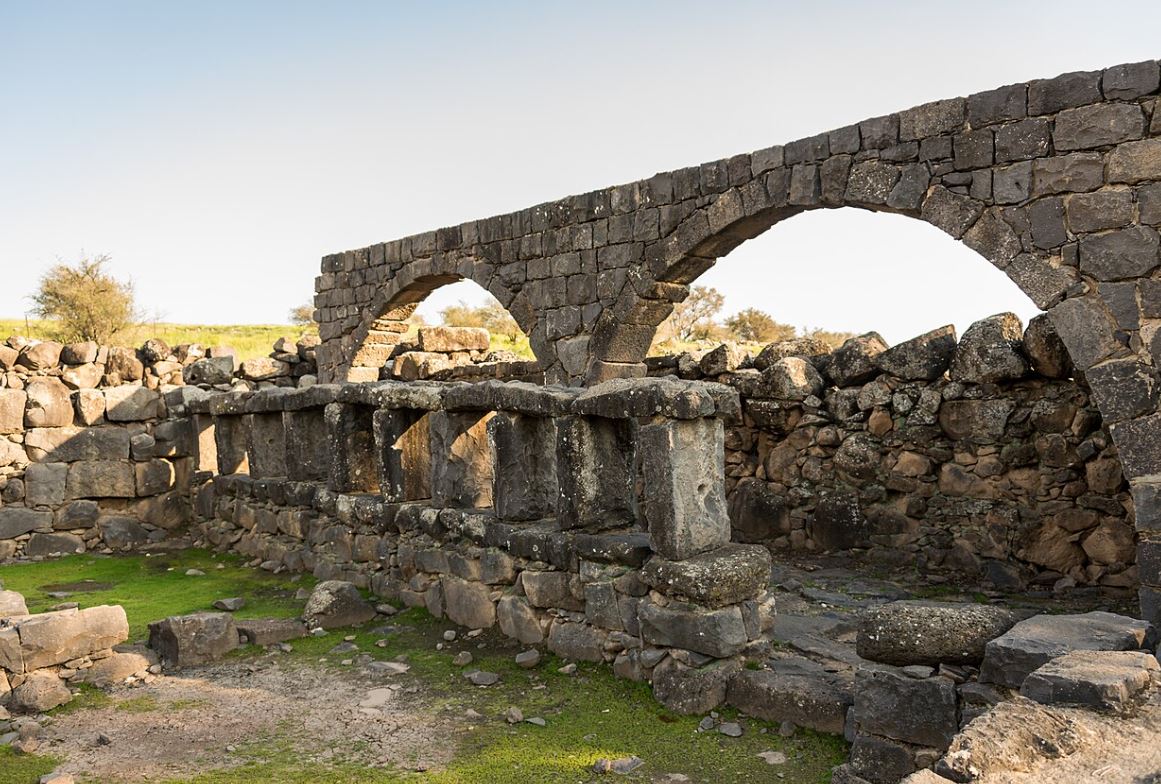
Ancient mikveh discovered in Usha
שועל, CC BY-SA 4.0 <https://creativecommons.org/licenses/by-sa/4.0>, via Wikimedia Commons
Rabbi Natan traveled to various places in the Jewish Diaspora, as well as back to Babylonia. Rabbi Benjamin Lau points out that he was one of those responsible for sharing the authentic Babylonian traditions with the scholars of the Land of Israel as we see here:
“Rabbi Natan says: If one said patruha, his statement stands, if one said pitruha, he said nothing. Rava said: Rabbi Natan, who is a Babylonian, distinguished between pitruha and patruha. [Pitruha means exempt her, which is unrelated to divorce; patruha means release her, which is very much related to divorce]. However, the tanna of our mishna, who is a resident of Eretz Yisrael, did not distinguish.” (Gittin 65b)
However, his heart remained with the land of Israel:
“Rabbi Natan said: There is no love like the love for the Torah, no wisdom like the wisdom of the land of Israel, no beauty like the beauty of Jerusalem,” (Avot deRabbi Natan 28:1)
The generation of Usha had to rebuild itself from within but it also faced challenges from the outside. Renegade rabbis in Babylonia tried to establish their authority over the Jewish world by determining when there should be a leap year. This had always been the prerogative of the Eretz Yisrael Sages. Rabbi Natan was dispatched to deal with them (see here) and issued this cutting and sarcastic response, twisting the verses to suit the rebels:
“Rabbi Natan rose and finished: ‘For from Babylonia will go Torah forth and the Eternal’s word from Nahar-Peqod.’ ” (Yerushalmi Nedarim 6:8)

Mika-Pekka Markkanen, CC BY-SA 4.0 <https://creativecommons.org/licenses/by-sa/4.0>, via Wikimedia Commons
The last generations of the Tannaim had to solidify and codify the many laws, sayings and ideas that existed in various compendia of mishnayot and beraitot. Rabbi Natan was an essential part of that process, along with Rabbi Judah the Prince; they are called the “end of the Mishnah,” (Bava Metzia 86a).
Rabbi Natan was a contemporary of Rabban Shimon ben Gamliel, Rabbi Judah the Prince’s father. Once, Rabbi Judah corrected Rabbi Natan and his father was shocked. Rabbi Judah apologized:
“And Rabbi Yehuda HaNasi later retracted his response, and said: My response was because of immaturity that I had in me, and I was insolent in the presence of Rabbi Natan the Babylonian” (Bava Batra 131a)
Another enduring work attributed to Rabbi Natan is a variation on the Ethics of the Fathers, called Avot deRabbi Natan.
Yet for all his importance we rarely hear Rabbi Natan’s name: he appears twice in the Mishnah and occasionally in the Gemara. Could his absence be because he and Rabbi Meir defied the Nasi, Rabban Shimon ben Gamliel (see Horayot 13b)? They were forced out of the Bet Midrash for plotting against him but their brilliance eventually got them back in. However, this re-entrance came with a condition:
“Rabbi Yosei said to the Sages: How is it that the Torah is outside and we are inside? Rabban Shimon ben Gamliel said to them: Let us admit them into the study hall. But we will penalize them in that we will not cite halakha in their names. They cited statements of Rabbi Meir in the name of aḥerim, meaning: Others, and they cited statements of Rabbi Natan in the name of yesh omerim, there are those who say.” (Horayot 13b)
While Rabbi Natan eventually apologized to Rabban Shimon ben Gamliel, the grudge of the Nasi’s family remained. Rabbi Natan’s name faded and there is even a suggestion that his Torah was gone as well:
“As long as a wise man lives, his wisdom remains; when he dies, his wisdom is lost with him. And so we find that when Rabbi Nathan died, his wisdom was lost with him” (Mechilta deRabbi Shimon bar Yohai 18:26)
But Rabbi Natan’s Torah did live on, in the great corpus of Mishnah that he helped create. And his name lived on as well, at least for two baby boys whose lives he saved.
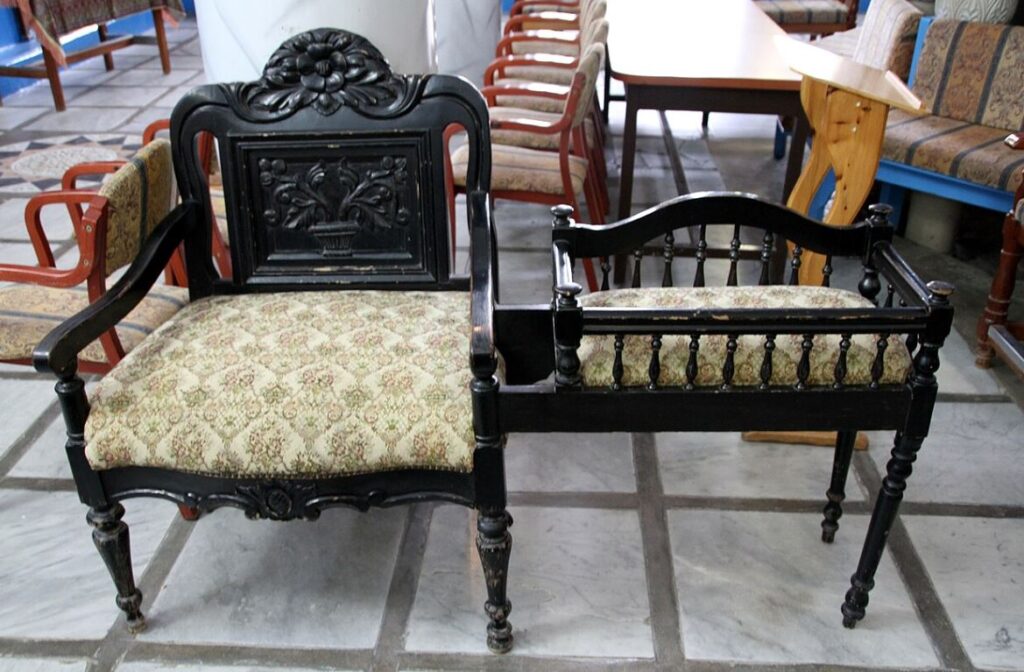
Brit chair in Abohav Synagogue, Tzfat
Gerd Eichmann, CC BY-SA 4.0 <https://creativecommons.org/licenses/by-sa/4.0>, via Wikimedia Commons