Life can be very dangerous in the animal kingdom. Imagine you are a chicken, minding your own business in the farmyard. Suddenly a bird of prey swoops down from the skies and carries you off. Or even more terrifying, you are a dove flying through the air. A raptor appears from nowhere and carries you away to be eaten.
Who are these carnivorous daredevils of the bird world? Our Gemara discusses two, of different sizes, the smaller netz and the larger gos:
דְּרוּסַת הַנֵּץ בְּעוֹף הַדַּק, וּדְרוּסַת הַגַּס בְּעוֹף הַגַּס
“If a small bird is clawed by a netz [it is a treifa], if a large bird is clawed by a gos [it is treifa]” (Chullin 42a)
Before we translate these words, let’s see where we have come across them before. While the Torah gives us signs for kosher animals and fish, for birds we have a list of the NON kosher ones; all the others are considered pure. On the non-kosher list we see the netz, often translated as a hawk:
וְאֵת֙ בַּ֣ת הַֽיַּעֲנָ֔ה וְאֶת־הַתַּחְמָ֖ס וְאֶת־הַשָּׁ֑חַף וְאֶת־הַנֵּ֖ץ לְמִינֵֽהוּ׃
“the ostrich, the nighthawk [tachmos], the sea gull; hawks [netz] of every variety;” (Vayikra 11:16)
Rashi, both in the Torah and in our Gemara, translates netz as espervier, a hawk in Old French. The scientific name is Accipter and they both come from the Latin word for grasping, which is what the hawk does to its prey. There are many subspecies of hawk, only a few of them either live in or winter in Israel. Our netz seems to be the common netz, known in English as the Eurasian sparrowhawk. These are small birds – a male weighs only 150 grams. They have a short sharp beak, talons, a long tail and amazing eyesight, eight times better than perfect human sight. That and their speed make it possible for them to see their prey from afar, swoop down and grab it super quickly. They are also very bold birds who are not afraid of people, therefore they will enter barnyards and even houses to get their prey.
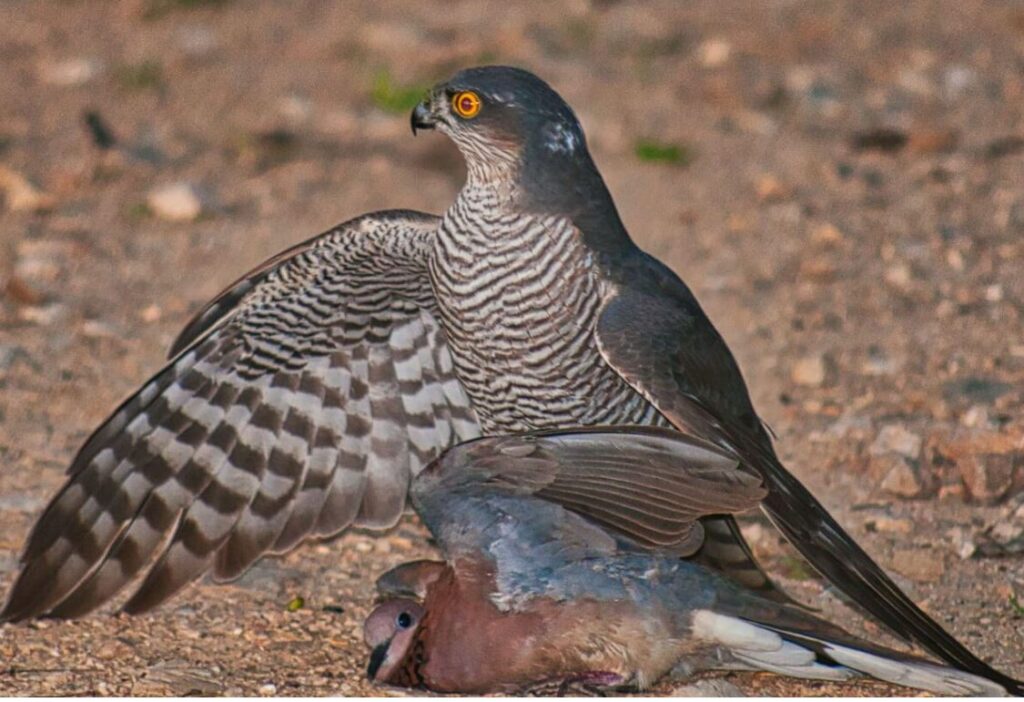
Sparrowhawk in full drisa mode
יאיר דב, CC BY-SA 4.0 <https://creativecommons.org/licenses/by-sa/4.0>, via Wikimedia Commons
The sparrowhawk can be a migratory bird, searching out warmer climates. That is why they will come from (cold) Europe to spend the winter in (warm) Israel. Abraham Ibn Ezra explains this verse in the book of Job in that way, that the netz will fly away to the south:
“Is it by your wisdom that the hawk grows pinions,
Spreads its wings to the south?” (Job 39:26)
The bird’s fear of the sparrowhawk is captured in this midrash about the Israelites fleeing Egypt:
“The school of Rabbi Yishmael taught: When the Israelites departed Egypt, to what were they comparable? To a dove that was fleeing a hawk, entered the crevice of a rock, and encountered a nesting serpent. It was unable to enter, as the serpent was still nesting. It would be unable to reverse its course because the hawk was positioned outside. What did the dove do? It began shrieking and striking itself with its wings so that the owner of the dovecote would come and rescue it. This is what the Israelites were analogous to at the sea. They were unable to descend into the sea because the sea had not yet been split for them. They were unable to reverse their course because Pharaoh was approaching. What did they do? “They were very frightened and the children of Israel cried out to the Lord” (Exodus 14:10). Immediately, “The Lord saved [Israel] on that day” (Exodus 14:30).” (Shir haShirim Rabba 2:14)
And what about the second bird? Some commentaries translate גס as large, meaning any large bird of prey: buzzard, owl. Rashi translates it as autour, a goshawk. These are larger birds which hunt larger prey, like geese or chickens, as Rashi explains in the Mishnah.
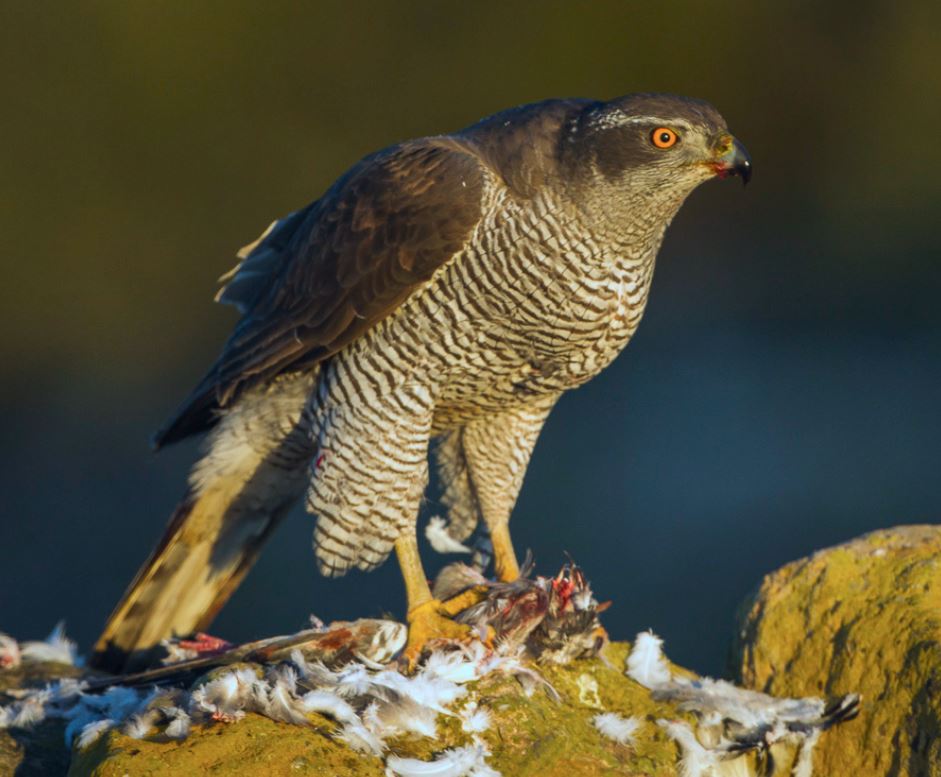
Goshawk
Francesco Veronesi from Italy, CC BY-SA 2.0 <https://creativecommons.org/licenses/by-sa/2.0>, via Wikimedia Commons
Another suggestion for the netz or the gos is the bird we call בז in Hebrew, or falcon in English. There are many varieties of falcons, in different sizes, but their common denominator is their speed. Falcons are the fastest creatures on earth. They can reach speeds of over three hundred kilometers an hour. Some of them live in Israel and the Rabbis were certainly amazed by their speed and skill at hunting.
A bird that is frequently mislabeled as a predatory bird is the nesher נשר. For years nesher was translated as eagle but even the Baalei Tosfot understood that this is not the correct translation (Tosfot “netz” Chullin 63a). Rather, a nesher is a griffon vulture. There are eagles in Israel, although not great bald ones, and they are calledעיט ayit. The difference between an ayit and a is that an ayit is a predator and kills animals to eat while a nesher eats carrion – animals that are already dead. While this sounds unsavory, it is actually extremely important in nature. The nesher is the “sanitation worker” of the natural world. By eating dead bodies left in the open, it prevents disease from spreading.
The nesher is a massive bird with a wing span of about two and half meters. It flies by drifting on the rising hot air of thermal currents. Because the nesher is so majestic, flying high above the cliffs with little or no effort of its wings, the Bible sees it as a metaphor for God. When God tells the Israelites that He has taken them out of Egypt and will now give them the Torah, He says:
אַתֶּם רְאִיתֶם אֲשֶׁר עָשִׂיתִי לְמִצְרָיִם וָאֶשָּׂא אֶתְכֶם עַל כַּנְפֵי נְשָׁרִים וָאָבִא אֶתְכֶם אֵלָי
You have seen what I did to the Egyptians, how I carried you on nesher’s wings to bring you to me (Shmot 19:4)
The nesher is seen as indefatigable and so Isaiah says:
וְקוֹיֵ ה’ יַחֲלִיפוּ כֹחַ יַעֲלוּ אֵבֶר כַּנְּשָׁרִים יָרוּצוּ וְלֹא יִיגָעוּ יֵלְכוּ וְלֹא יִיעָפוּ
Those who hope in the Lord shall renew their strength, they shall mount up with wings of eagles, they shall run and not be weary, they shall walk and not faint. (Isaiah 40:31)
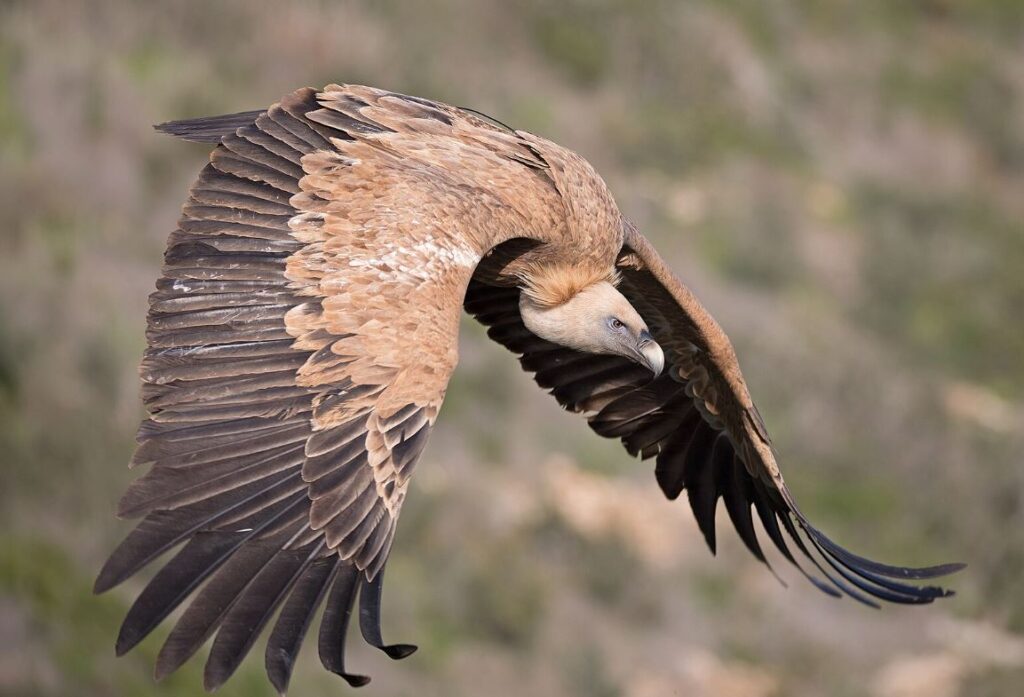
Nesher
Artemy Voikhansky, CC BY-SA 4.0 <https://creativecommons.org/licenses/by-sa/4.0>, via Wikimedia Commons
From tiny but deadly sparrowhawks to majestic griffon vultures, Israel is a bird paradise. Just watch out for your chickens.