Does the Torah want us to enjoy everything the world has to offer? The answer at first would seem to be no – Judaism has so many rules and prohibitions that affect our daily life. But here in Chullin we get a surprising statement from a surprising source. Yalta, Rav Nahman’s wife, claims that for everything that Jews are forbidden, God has created a permissible alternative:
“Yalta said to Rav Naḥman: Any item that the Merciful One prohibited to us, He permitted to us a similar item. He prohibited to us blood, yet He permitted to us liver, . . it is prohibited to eat pork, but one may eat the brain of a shibuta fish. . . The Torah prohibits sexual intercourse with one’s brother’s wife, and yet it permits one to marry his yevama. . . I wish to eat meat cooked in milk. Rav Naḥman said to his cooks: Roast udders on a spit for her.” (Chullin 109b)
Yalta challenges her husband to find her a kosher equivalent to meat cooked in milk. Rav Nahman agrees with her logic and indeed finds her an acceptable option, an udder, i.e., meat of the cow that is or was filled with milk.
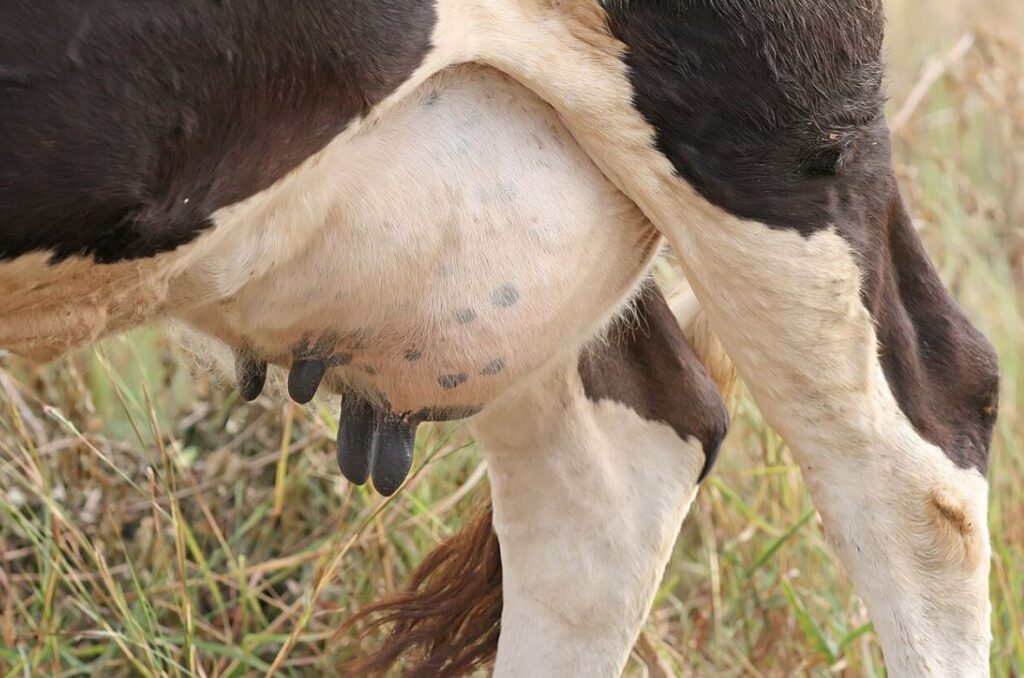
Muhammad Mahdi Karim, GFDL 1.2 <http://www.gnu.org/licenses/old-licenses/fdl-1.2.html>, via Wikimedia Commons
This sophisticated understanding of halakha and its boundaries is not expressed by Rav Nahman himself or any of his Rabbinic colleagues, but rather by his wife. Wives tend to be silent in Rabbinic literature, with a few famous exceptions. Yalta is one of the most famous. What do we know about her?
Rav Nahman, one of the most prominent Babylonian amoraim, lived in the third century CE in Nehardea and then in Mahoza (see here). He was a student of Shmuel as well as of Rabba bar Avuha who becomes his father in law (Yevamot 80b). Yalta was raised in a prominent household; some suggest that her father was the Resh Galuta, as we see in this statement later in Chullin:
“And just because Rav Naḥman is the son-in-law of the family of the Nasi, can he demean the halakhic statement of Rabbi Yoḥanan?” (Chullin 124b)
Yalta was accustomed to a high level of respect and comfort and Rav Nahman provided it for her, even in a situation that might have been halachically questionable, such as carrying her on a sedan chair on a holiday:
“Is that so? But didn’t Rav Naḥman permit Yalta to go out on a festival on a chair borne on poles? Yalta is different, as she was afraid of falling” (Betzah 25b)
Tosfot adds that such permission was granted only if there was a public need. In this situation, Yalta was a person of great importance and she needed to go out among the crowds and provide for them.
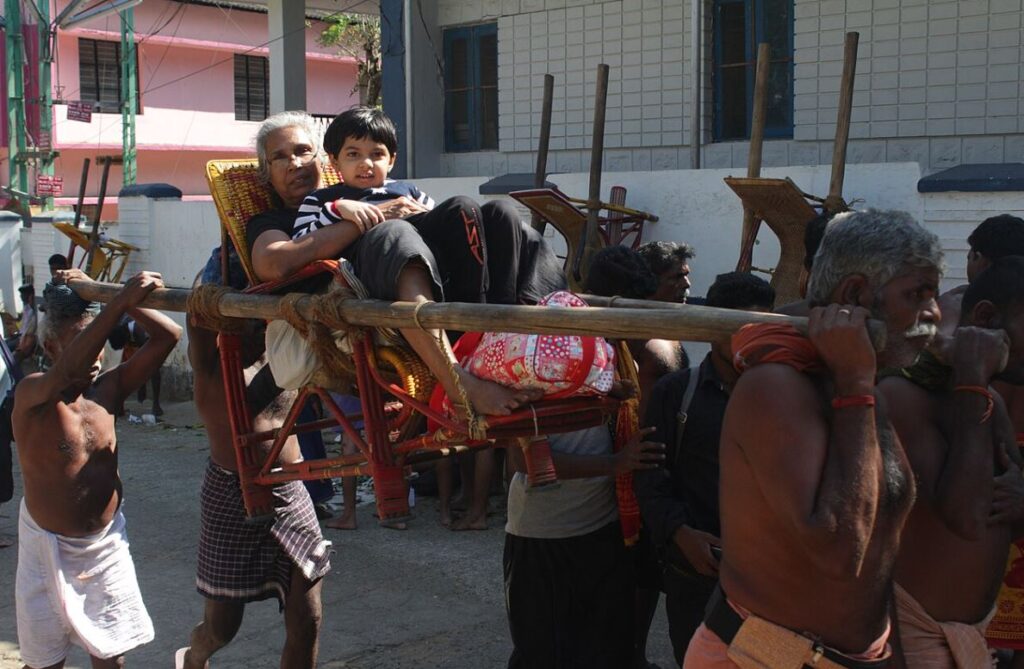
Praveenp, CC BY-SA 4.0 <https://creativecommons.org/licenses/by-sa/4.0>, via Wikimedia Commons
Yalta also protected Rav Nahman and his honor. When she sees that he is in danger of being humiliated by Rav Yehuda, she discreetly sends him a message to end the conversation before it is too late:
“his wife sent a message to him: Release him, so that he not equate you with another ignoramus” (Kiddushin 70b)
Yalta was not just wealthy and powerful, she was compassionate towards those less fortunate than she was, even in situations where she needed to defy authority. When the Exilarch’s household (her father’s?) torments Rav Amram, she makes sure to care for him:
“When the members of the Exilarch’s house would afflict Rav Amram the Pious they would make him lie down on the snow. . . Yalta heard. She brought him to the bathhouse, and placed him in the water of the bathhouse until the water of the bathhouse turned red like blood.” (Gittin 67b)
What makes Yalta unusual is her knowledge of Torah law and her willingness to assert herself. Like many women, she sent her menstrual blood to a rabbi when she was unsure if she was pure and permitted to her husband. However, unlike most women, she challenged her regular “posek” and sought a second opinion after she understood that his sight was impaired:
“when Yalta said to him: Every day that I bring blood of this kind of color to Rabba bar bar Ḥana he deems me pure, and specifically now he issued a different ruling, as he feels pain in his eye.”(Niddah 20b)
This halakhic competence and confidence is what is on display in our story in Chullin. Yalta knows that where there is a will, there is often a halakhic way. That is core of her request to Rav Nahman to find her a permissible substitute to meat and milk

What would Yalta have to say about today’s ReMIlk and Beyond Burger?.
Pascal Shirley, CC BY-SA 4.0 <https://creativecommons.org/licenses/by-sa/4.0>
The most famous, and difficult story about Yalta is her conflict with the traveling sage Ulla. Here is the tale:
“Ulla happened to come to the house of Rav Naḥman. He ate bread, recited Grace after Meals, and gave the cup of blessing to Rav Naḥman. Rav Naḥman said to him: Master, please send the cup of blessing to Yalta, my wife. Ulla responded to him: Rabbi Yoḥanan said as follows: The fruit of a woman’s body is blessed only from the fruit of a man’s body, as it is stated: ‘and He will bless the fruit of your body” (Deuteronomy 7:13). the fruit of her body” was not stated. Rather, “He will bless the fruit of your [masculine singular] body.” . . . meanwhile Yalta heard, so she arose in a rage, entered the wine-storage, and broke four hundred barrels of wine. Rav Naḥman said to Ulla: Let the Master send her another cup. Ulla sent a different cup with a message saying that all of the wine in this barrel is wine of blessing. She sent him: From itinerant peddlers, come meaningless words, and from rags come lice.” (Berachot 51b)
This story has often been seen as a highly emotional response of a spoiled woman to a small slight. Gila Fine in her book The Madwoman in the Rabbi’s Attic, reinterprets it. She explains that far from attacking Yalta, the Gemara actually supports her desire to receive wine from the cup of blessing. Right before her story is told, we learn the halakha:
“And he sends it as a gift to members of his household; so that his wife will be blessed.” (Berachot 51b)
In addition, Yalta gets the last word in the story and Ulla is left hanging. Fine further explains the story not as an act of rage but as a sophisticated comeback by Yalta to Ulla’s contention that only a man is responsible for children (fruit). Ulla is reflecting the ancient idea that a man’s sows the seed of a child and the woman is only the vessel that carries it. Yalta responds by smashing the wine vessels – if vessels are so unimportant, I will destroy them. Both the barrels (women) and the wine (men) are necessary to create a child, people are not lice that spontaneously regenerate!
Yalta’s cleverness and compassion, her power and her insight, put her in the pantheon of Rabbinic heroines.
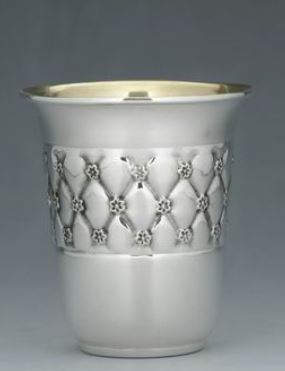
http://hadadbros.com/, CC BY-SA 2.5 IL <https://creativecommons.org/licenses/by-sa/2.5/il/deed.en>, via Wikimedia Commons