A huldah attacks your bird. Is it a trefa?
MISHNA: And these are tereifot in a bird: One with a perforated gullet, or with a cut windpipe ; or if a huldah struck the bird on its head in a place that renders it a tereifa, (Chullin 56a)
Assuming the huldah in question is not the name of the girl next door (more on that later), it would help to know what a huldah is. In modern Hebrew a huldah is a rat and that is probably why you rarely meet women named Huldah. However, many translations of Rabbinic literature translate huldah as weasel, a different family altogether than a rat. To add to the confusion we also hear about a creature called a holed, which is one of the seven unclean animals:
וְזֶ֤ה לָכֶם֙ הַטָּמֵ֔א בַּשֶּׁ֖רֶץ הַשֹּׁרֵ֣ץ עַל־הָאָ֑רֶץ הַחֹ֥לֶד וְהָעַכְבָּ֖ר וְהַצָּ֥ב לְמִינֵֽהוּ׃
“The following shall be impure for you from among the things that swarm on the earth: the holed, the mouse, and great lizards of every variety;” (Vayikra 11:29)
The huldah appears in many places in Rabbinic literature and was clearly part of the Rabbis’ world. But are all huldot created equal? Perhaps the word can include more than one variety of animal.
Dr. Moshe Raanan helps us unravel the problem. He says there are three options for a huldah: the common rat, the weasel (scientific name Mustela), and the blind mole rat (scientific name Spalax). Each one has different characteristics and he tries to match up the references in the Gemara with these qualities.
Our Gemara talks about the huldah having thin and crooked teeth, as well as attacking a bird on the back of its neck. While a weasel does attack small animals in this way, it has large straight teeth, while a rat has thin and crooked teeth.
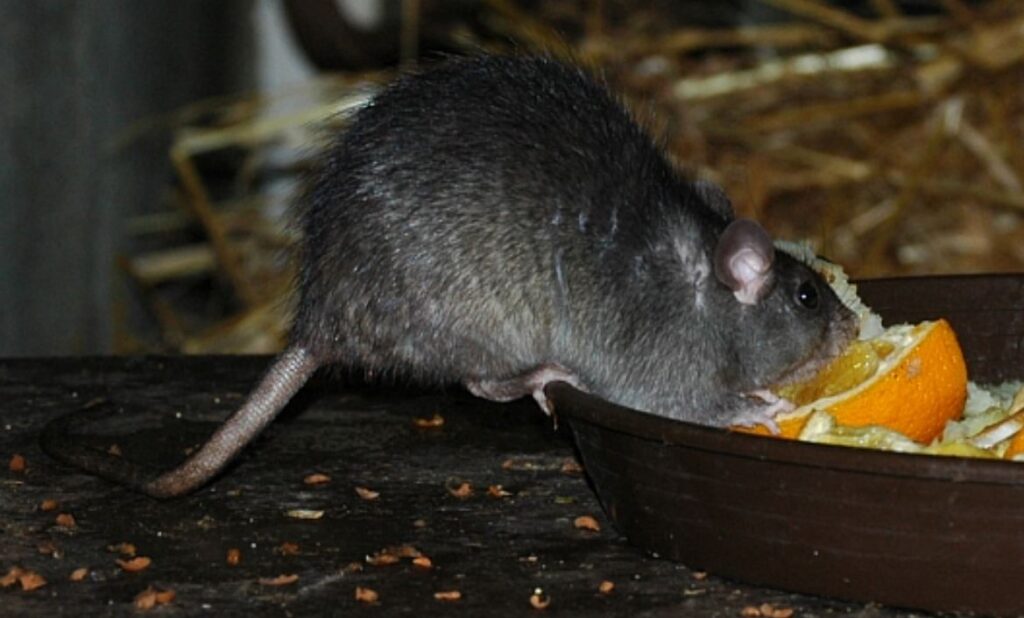
Rat
Martin Lemke, Copyrighted free use, via Wikimedia Commons
One hint to understanding the huldah is to look at its name. Raanan points out the connection to our masechet: something that renders shechitah invalid is halada חלדה: when the knife is hidden (coming from inside the animal and slicing out). A huldah is also hidden in that it tunnels underground:
“What are the circumstances of concealing the knife? It is like a huldah that resides in the foundations of houses that are concealed.” (Chullin 20b)
The huldah lives among people and therefore can be a threat to domestic animals. God promises to protect the property of people who go on pilgrimage, and that includes protection from the huldah:
“Isi ben Yehuda says: With regard to that which the Torah said: “And no man shall covet your land, when you go up to appear before God your Lord three times in the year” (Exodus 34:24), this teaches that your cow shall graze in the meadow and no beast will harm it, and your rooster shall peck in the garbage dump and no huldah shall harm it.” (Pesachim 8b)
The huldah has a varied diet. It will eat meat and even eat a dead baby as we see in the distressing story of a maid who threw her fetus into a pit and then a huldah came and dragged it away (Niddah 15b).
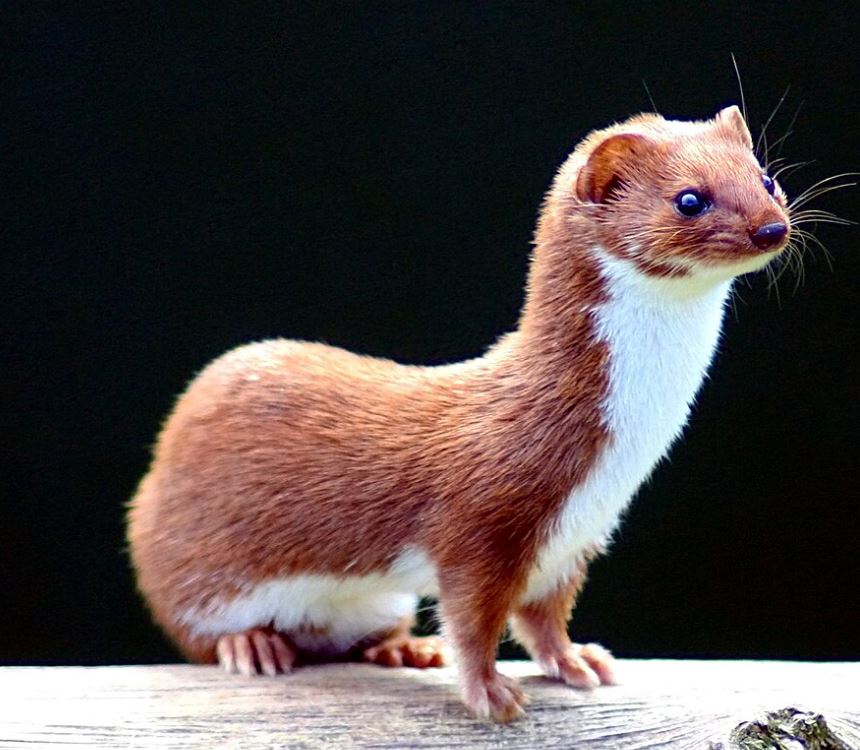
Weasel
Keven Law, CC BY-SA 2.0 <https://creativecommons.org/licenses/by-sa/2.0>, via Wikimedia Commons
However, it will also eat bread and we might suspect it of hoarding the bread and taking it from place to place:
“one need not be concerned that perhaps a huldah dragged leaven from house to house, or from place to place,” (Mishnah Pesachim 1:3)
Hoarder, tunneller, omnivore, comfortable among people: which animal best fits this description? Raanan rejects the mole rat. While it does live underground and is also is a hoarder, it rarely comes near people. It also eats vegetables and not meat or bread, and it does not even drink water, something a huldah does (Chullin 9b).
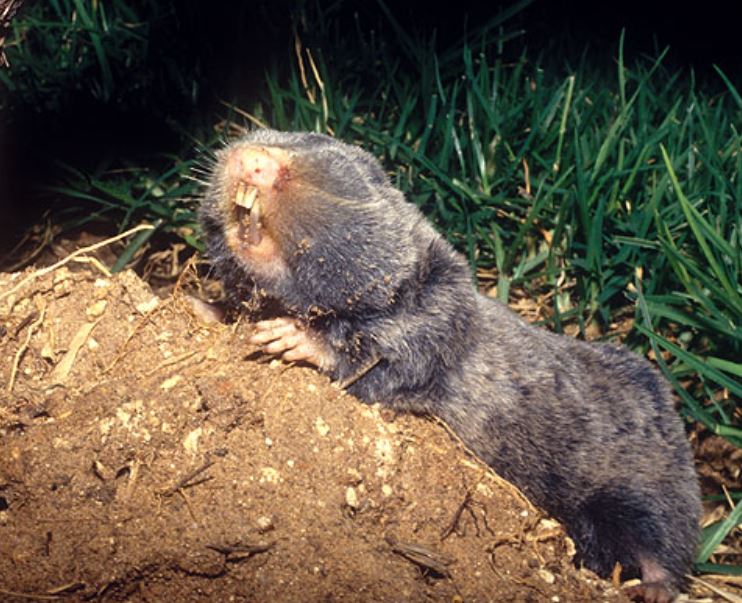
Mole rat
Bassem18, CC BY-SA 3.0 <http://creativecommons.org/licenses/by-sa/3.0/>, via Wikimedia Commons
Rats and weasels are both good candidates for the huldah. They each live among people, make tunnels underground and eat a varied diet. Some descriptions, like those of the teeth in our Gemara, fit one animal better than another. It seems likely that the Rabbis used the term huldah to mean both a rat and a weasel.
And what about the human Huldah, one of the seven women that the Gemara tells us were prophets? She was clearly an important person, significant enough that the people came to her when a Torah was discovered in the time of King Josiah:
“So the priest Hilkiah, and Ahikam, Achbor, Shaphan, and Asaiah went to the prophetess Huldah—the wife of Shallum son of Tikvah son of Harhas, the keeper of the wardrobe—who was living in Jerusalem in the Mishneh, and they spoke to her” (Kings 2 22:14)
Huldah is a strange choice for a name. The Gemara refers to this odd name and sees it as a way to denigrate her and her fellow prophetess, Devorah for being haughty:
“Haughtiness is not befitting a woman. And a proof to this is that there were two haughty women, whose names were identical to the names of loathsome creatures. One was called a hornet (Devorah) and one was called a huldah” (Megillah 14b)
The Gemara in Pesachim uses the double meaning of huldah the animal and Huldah the prophetess to make a sly joke:
“And is the huldah a prophetess that knows that now is the fourteenth of Nisan and no one will bake until the evening, and it leaves over bread and conceals it in its hole?” (Pesachim 9b)
Finally we have another use of the word huldah, this time for the gates on the southern wall of the Temple Mount:
“There were five gates to the Temple Mount: The two Huldah gates on the south were used both for entrance and exit” (Middot 1:3)
While some commentaries suggest that these gates received their name because Huldah’s tomb was nearby (and indeed it was placed there in the 1965 Holyland model of Jerusalem), a more likely explanation is connected to the huldah’s tunneling behavior. Anyone who entered these gates would go down a long underground corridor. At the end was a staircase which led up into the light and splendor of the Temple courtyards. While these corridors are off limits to archaeologists today, we have testimony about them and they were splendidly decorated. Not exactly a huldah’s tunnel.
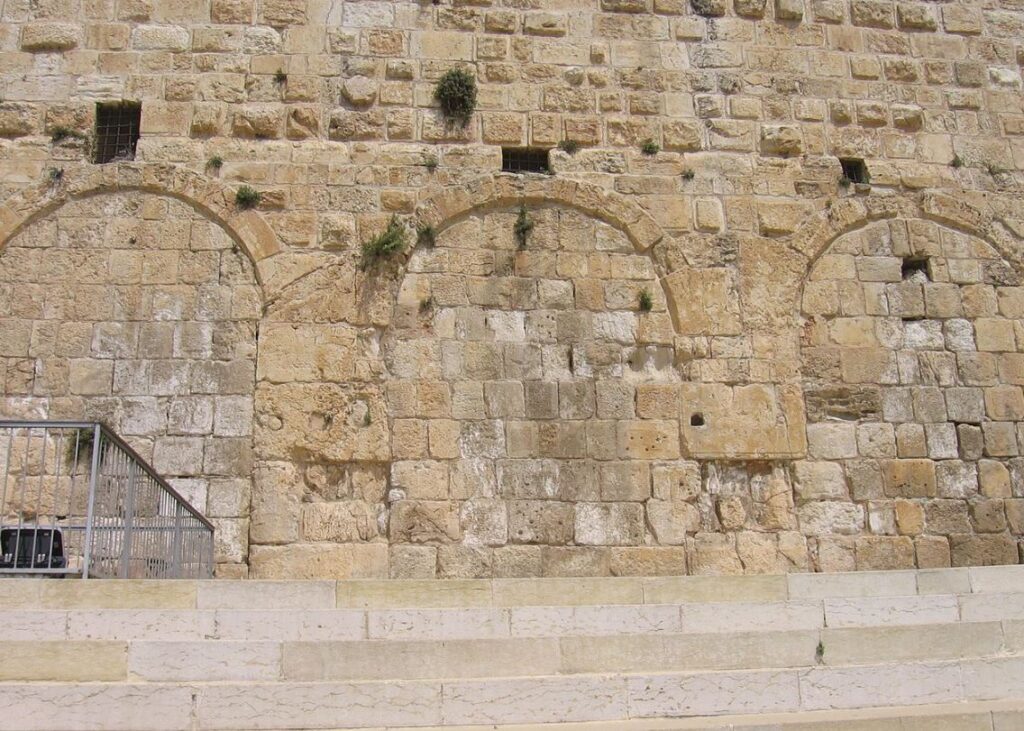
Bachrach44, Public domain, via Wikimedia Commons