Have you ever been to a really wild party? One where there is a lot to eat and even more to drink and some people might behave inappropriately? Welcome to the Chag haGez, the sheep shearing party.
The next to last chapter of Chullin tells us about the the Reishit haGez, the gift of wool given to the Cohen, but omits the spicier details of the shearing party. For that we have to go to Tanakh. But first a few facts.
Sheep are typically sheared of their wool once a year, usually in the spring. They need the warmth in the winter but will do fine without the extra layer in the summer. They are usually washed before they are shorn, although the wool certainly needs more cleaning later. The image of cleansed sheep lined up for shearing give the author of the Song of Songs a poetic image for teeth:
“Your teeth are like a flock of ewes
Climbing up from the washing pool;” (Song of Songs 6:6)
The shepherd could give his own sheep a haircut but often professionals were brought in. The Midrash in Bereshit Rabba talks about how doing magic in Egypt is ridiculous, as you are bringing a commodity to a place that already has a surfeit of it. Among other examples they cite bringing sheepshearers, גזזים to Damascus, a place with a thriving wool industry.
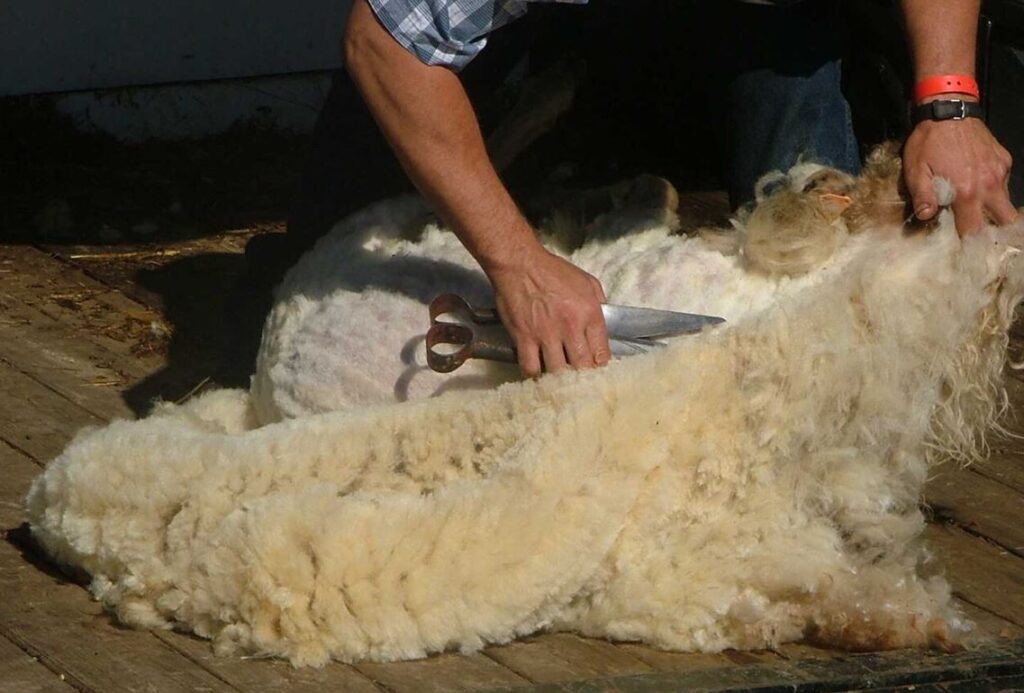
Cstaffa, CC BY-SA 3.0 <http://creativecommons.org/licenses/by-sa/3.0/>, via Wikimedia Commons
In order to make the process easier for the barber, the sheep are often tied up and perhaps muzzled. The prophet Isaiah compares a downtrodden Jew to such a trussed sheep:
“He was maltreated, yet he was submissive,
He did not open his mouth;
Like a sheep being led to slaughter,
Like a ewe, dumb before those who shear her,
He did not open his mouth.” (Isaiah 53:7)
Abraham Ibn Ezra adds a commentary that unfortunately was apt throughout many years of the Diaspora:
“Yet he opened not his mouth. This requires no explanation; for this is the case with every Jew in exile; when he is insulted he dares not reply.”
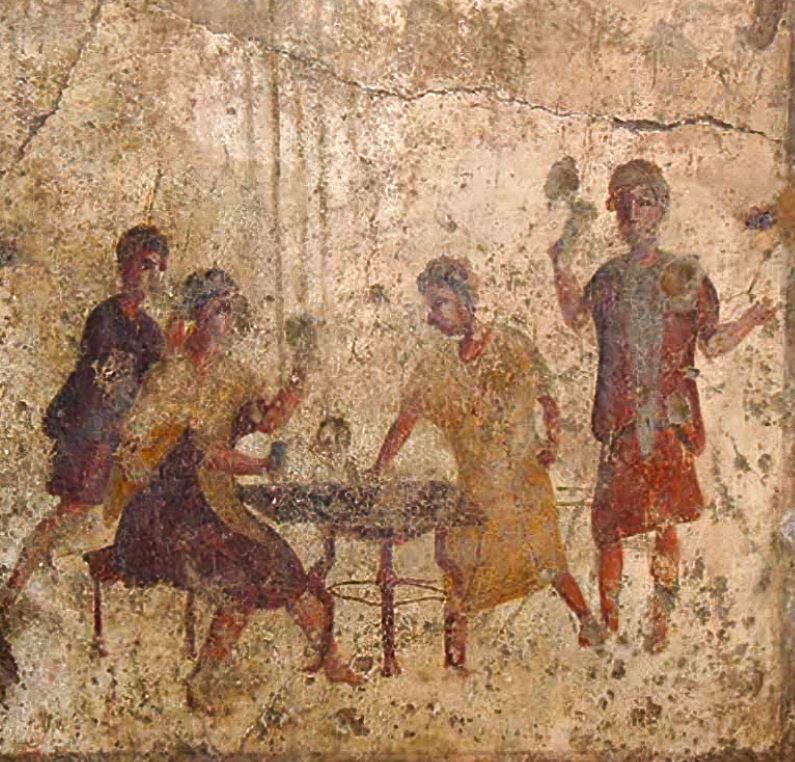
Now that we understand the mechanics of the shearing, let’s talk about the party. We have four different Bible stories that revolve around the circumstances of a sheep shearing. There are certain elements that they have in common. Sheep shearing would usually take place away from home, out in the open where the sheep graze. The owner would go out to spend time with his shepherds and flock. The “harvest” of wool was a happy occasion and would be celebrated with a big party and lots of drinking. It was an opportunity for the owner to invite friends and family and for people to come together
All of these themes explain our stories. A large gathering, away from home base, lots of food and a wealthy flock owner: all these provide opportunities to settle scores, to receive handouts and to join together, or break apart.
The first person to take advantage of an owner’s absence during sheep shearing was Rachel. When her father Laban leaves she takes his idols and the family makes their escape:
“Meanwhile Laban had gone to shear his sheep, and Rachel stole her father’s oracle idols. Jacob kept Laban the Aramean in the dark, not telling him that he was fleeing, and fled with all that he had” (Bereshit 31:19)
Later in Bereshit, Judah goes to his own sheep shearing. He has essentially abandoned his daughter in law Tamar after his first two sons die when they are married (sequentially) to her. Tamar takes advantage of the fact that Judah is in an unfamiliar place, and perhaps in a mood to be less than cautious and she disguises herself and seduces him:
“Judah went up to Timnah to his sheepshearers, together with his friend Hirah the Adullamite. And Tamar was told, ‘Your father-in-law is coming up to Timnah for the sheepshearing.’ So she took off her widow’s garb, covered her face with a veil, and, wrapping herself up, sat down at the entrance to Enaim, which is on the road to Timnah; for she saw that Shelah was grown up, yet she had not been given to him as wife.” (Bereshit 38:12)
These two stories, despite their twists and turns, have happy endings. Not so the complex tale of Avshalom and his half brother Amnon. Avshalom sought revenge on Amnon for raping their sister Tamar. The sheep shearing provided the perfect opportunity, away from their father’s David’s eyes and while Amnon’s guard was down:
“Two years later, when Absalom was having his flocks sheared at Baal-hazor near Ephraim, Absalom invited all the king’s sons. . . Now Absalom gave his attendants these orders: ‘Watch, and when Amnon is merry with wine and I tell you to strike down Amnon, kill him! Don’t be afraid, for it is I who give you the order. Act with determination, like brave men!’ ” (Samuel II 13:23)
The longest and most detailed tale involving a Chag haGez takes place in the first book of Samuel. David, who is not yet a king but still an outlaw in the wilderness of Judah, shows up at the party made by Naval, a wealthy stock owner in the southern Hebron Hills.
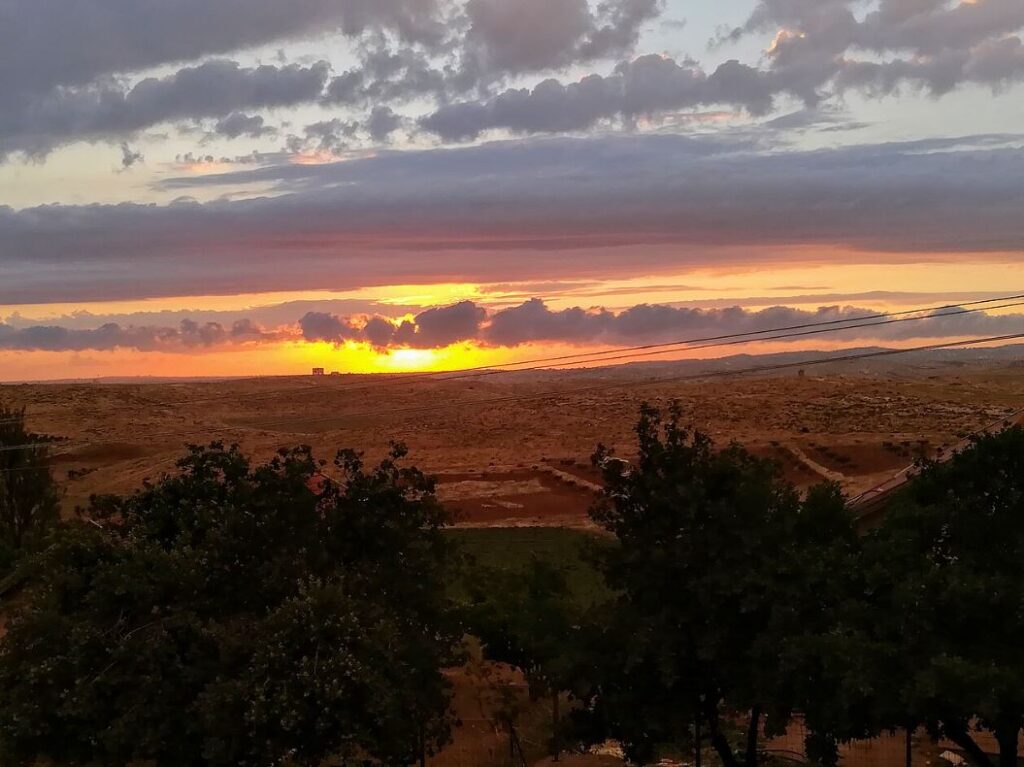
View to the Hebron Hills today
עטרת 100, CC BY-SA 4.0 <https://creativecommons.org/licenses/by-sa/4.0>, via Wikimedia Commons
David assumes that this is a good time to ask for some generous recompense for protecting Naval’s shepherds:
“Ask your young men and they will tell you. So receive these young men graciously, for we have come on a festive occasion. Please give your servants and your son David whatever you can” (Samuel I 25:8)
Naval however sees no reason to share the meat he has had prepared:
“Should I then take my bread and my water, and the meat that I slaughtered for my own shearers, and give them to men who come from I don’t know where?” (25:11)
David is infuriated and plans a terrible revenge on Naval and his household. However, fortunately Naval has a wise and kind wife, Avigail, and she averts disaster by both bringing David supplies and profusely apologizing. When she returns home she sees that Naval is completely drunk and she does not say anything to him.
“When Abigail came home to Nabal, he was having a feast in his house, a feast fit for a king; Nabal was in a merry mood and very drunk, so she did not tell him anything at all until daybreak” (25:36)
However, in the morning when he sobers up she tells him and he dies of shock and fright.
In pre-State Israel, kibbutzim wanted to revive the idea of a Chag haGez, alongside other agricultural celebrations. Music and plays were composed for it and the first one was held in Bet Alfa. But unlike the First Fruits ceremonies which still take place in many kibbutzim today, the sheep shearing never really took off. Perhaps Bible readers understood the consequences?